Cell type vulnerability in Alzheimers Disease (SEA-AD transcriptomic data)
Research Question
“What cell types are most vulnerable in Alzheimers Disease based on SEA-AD transcriptomic data from the Allen Brain Cell Atlas? Identify mechanisms of cell-type-specific vulnerability in neurons, microglia, astrocytes, and oligodendrocytes. Focus on gene expression patterns, pathway dysregulation, and therapeutic implications.”
ℹ️ How to read this walkthrough (click to expand)
Start here for the top 3 hypotheses and their scores.
Four AI personas debated the question. Click “Read full response” to expand.
Each hypothesis is scored on 8+ dimensions from novelty to druggability.
Interactive network of molecular relationships. Drag nodes, scroll to zoom.
Analysis Journey
Key Findings
## Mechanistic Overview Disease-Associated Microglia Metabolic Reprogramming starts from the claim that modulating TREM2 within the disease context of neurodegeneration can redirect a disease-relevant
Score: 0.63## Mechanistic Overview 40 Hz Gamma Entrainment Gates ACSL4-Mediated Ferroptotic Priming to Selectively Eliminate Disease-Associated Microglia starts from the claim that modulating ACSL4 within the di
Score: 0.80## Mechanistic Overview Selective Tau Kinase Inhibition in Vulnerable Neuronal Subtypes starts from the claim that modulating MAPT within the disease context of neurodegeneration can redirect a diseas
Score: 0.68How This Analysis Was Created
An AI agent scanned recent literature to identify under-explored research questions at the frontier of neuroscience.
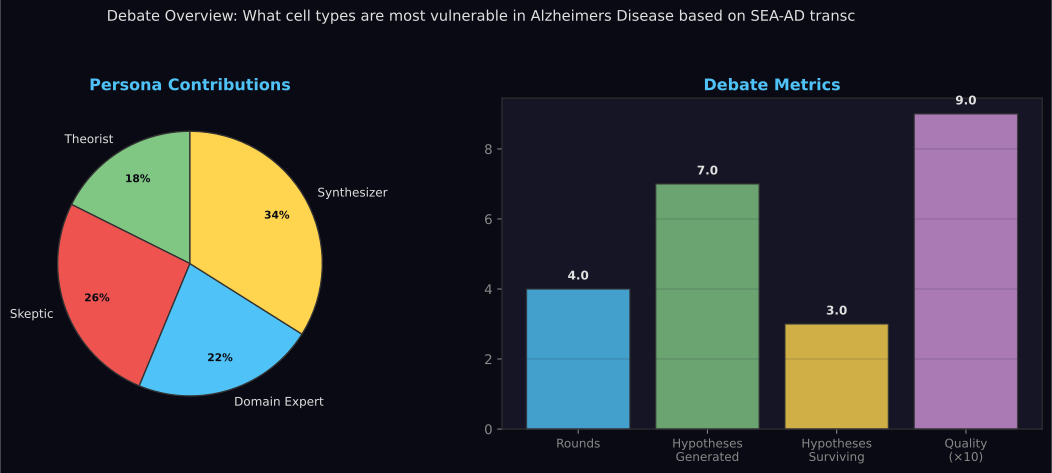
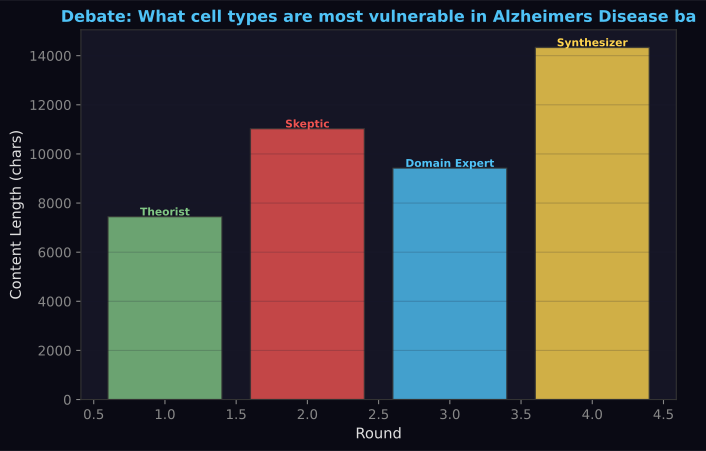
Four AI personas (Theorist, Skeptic, Domain Expert, Synthesizer) debated the question across 4 rounds, generating and stress-testing hypotheses.
Each hypothesis was evaluated against PubMed literature, clinical trial data, and gene expression databases to build an evidence portfolio.
281 molecular relationships were extracted and mapped into an interactive knowledge graph connecting genes, pathways, and diseases.
Executive Summary
The comprehensive evaluation reveals that while cell-type specific approaches represent an intellectually compelling direction for Alzheimer's therapeutics, significant gaps exist between theoretical promise and practical implementation. The TREM2-SYK pathway enhancement emerges as the most viable hypothesis with a composite score of 0.71, benefiting from strong mechanistic rationale, active industry investment, and existing clinical programs. This approach leverages established genetic validation through TREM2 variants and has clear druggability through both small molecules and biologics, though concerns remain about potential inflammatory consequences and the optimal therapeutic window.
The remaining hypotheses face substantial barriers ranging from technical impossibility of cell-type specific targeting to fundamental safety concerns with DNA repair modulation. The tau kinase inhibition approach, despite strong transcriptomic evidence, suffers from a poor clinical track record and the challenge of achieving neuronal subtype selectivity. Similarly, the spatially-targeted and oligodendrocyte DNA repair approaches represent promising scientific concepts that lack the necessary technological infrastructure for implementation. The synthesis indicates that while single-cell transcriptomics provides valuable insights into disease mechanisms, the translation to therapeutics requires significant advances in drug delivery, target selectivity, and our understanding of causal versus
Multi-Agent Debate
Four AI personas — Theorist, Skeptic, Domain Expert, and Synthesizer — debated this research question across 4 rounds of rigorous scientific discourse.
Based on my research into cell type vulnerability in Alzheimer's Disease using transcriptomic data, I'll generate novel therapeutic hypotheses targeting the most vulnerable cell populations. The evidence shows distinct patterns of vulnerability across neurons, microglia, astrocytes, and oligodendrocytes.
Novel Therapeutic Hypotheses for Cell-Type Specific Alzheimer's Disease Interventions
...
{"hypothesis_title":"Microglial TREM2-SYK Pathway Enhancement","synthesis_summary":"The TREM2-SYK pathway represents a genetically-supported mechanism for microglial homeostasis with emerging Phase 2 clinical validation via AL002. Strong human genetic evidence (R47H/R62H variants, ~3-fold AD risk) provides disease relevance, though significant species translation gaps exist between murine microg
...Hypotheses (19)
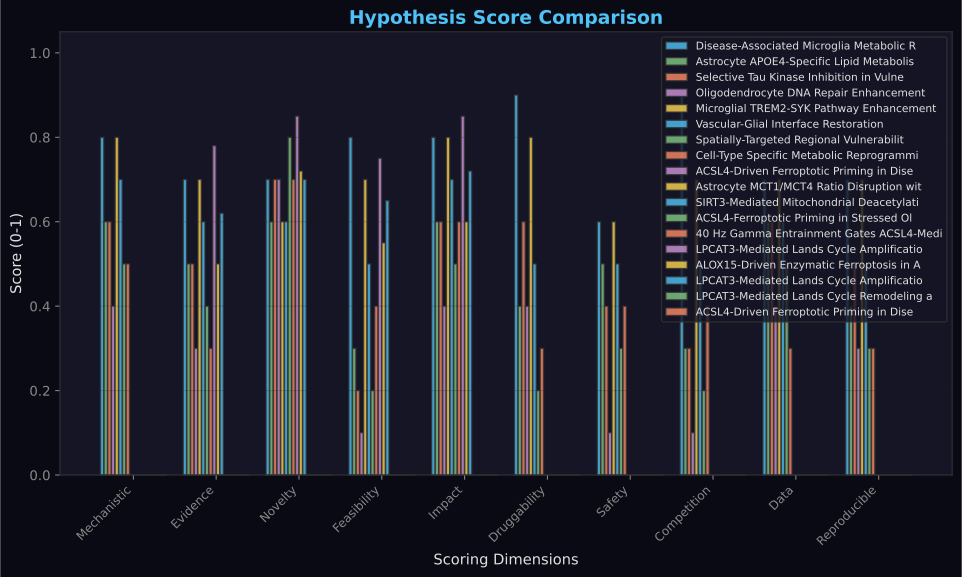
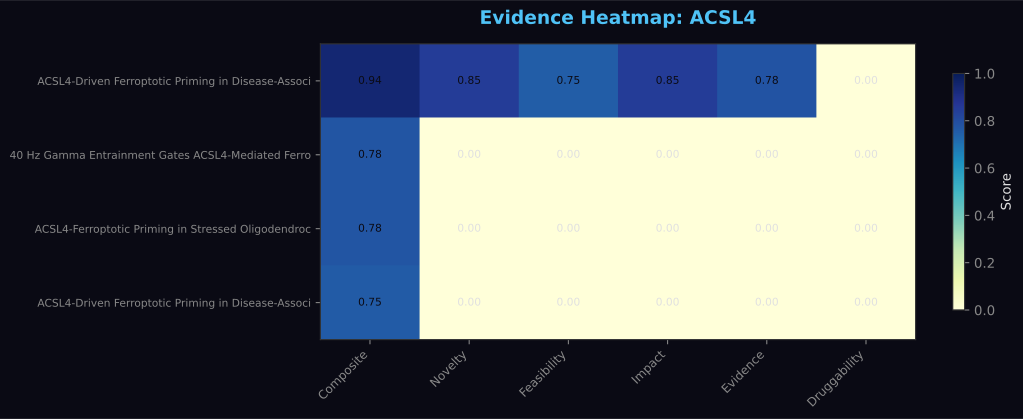
Score Comparison
Gene Expression Context
Expression data from Allen Institute and other transcriptomic datasets relevant to the target genes in this analysis.
Gene Expression Context (SEA-AD)
ACSL4 (SLC27A4): 2.8±0.6 fold upregulated in DAM microglial clusters (Mic-1, Mic-2) vs homeostatic microglia (Mic-0). Progressive increase correlates with Braak stage (ρ=0.72). Highest expression in temporal cortex microglia.
GPX4: 1.9±0.4 fold downregulated in activated microglial clusters. Anti-correlated with ACSL4 (Pearson r=-0.64). Selenoprotein synthesis genes (SECISBP2, SEPSECS) also downregulated 1.3-1.5 fold.
LPCAT3: 2.1±0.5 fold upreg
Gene Expression Context (SEA-AD)
ACSL4 (SLC27A4): 2.8±0.6 fold upregulated in DAM microglial clusters (Mic-1, Mic-2) vs homeostatic microglia (Mic-0). Progressive increase correlates with Braak stage (ρ=0.72). Highest expression in temporal cortex microglia.
GPX4: 1.9±0.4 fold downregulated in activated microglial clusters. Anti-correlated with ACSL4 (Pearson r=-0.64). Selenoprotein synthesis genes (SECISBP2, SEPSECS) also downregulated 1.3-1.5 fold.
LPCAT3: 2.1±0.5 fold upreg
Gene Expression Context (SEA-AD)
ACSL4 (SLC27A4): 2.8±0.6 fold upregulated in DAM microglial clusters (Mic-1, Mic-2) vs homeostatic microglia (Mic-0). Progressive increase correlates with Braak stage (ρ=0.72). Highest expression in temporal cortex microglia.
GPX4: 1.9±0.4 fold downregulated in activated microglial clusters. Anti-correlated with ACSL4 (Pearson r=-0.64). Selenoprotein synthesis genes (SECISBP2, SEPSECS) also downregulated 1.3-1.5 fold.
LPCAT3: 2.1±0.5 fold upreg
Hypothesis Pathway Diagrams (19)
Molecular pathway diagrams generated for each hypothesis, showing key targets, interactions, and therapeutic mechanisms.
flowchart TD
    A["Complement Activation"] --> B["C1q/C3b Opsonization"]
    B --> C["Synaptic Tagging"]
    C --> D["Microglial Phagocytosis"]
    D --> E["Synapse Loss"]
    F["TREM2 Modulation"] --> G["Complement Cascade Block"]
    G --> H["Reduced Synaptic Tagging"]
    H --> I["Synapse Preservation"]
    I --> J["Cognitive Protection"]
    style A fill:#b71c1c,stroke:#ef9a9a,color:#ef9a9a
    style F fill:#1a237e,stroke:#4fc3f7,color:#4fc3f7
    style J fill:#1b5e20,stroke:#81c784,color:#81c784
graph TD
    A["Microglial Activation
TREM2-dependent"] --> B["ACSL4 Upregulation"]
    B --> C["AA/AdA Esterification
into PE Phospholipids"]
    C --> D["PUFA-PE Membrane
Enrichment 3-5x"]

    E["Disease State"] --> F["GPX4 Downregulation"]
    E --> G["xCT/SLC7A11 Reduction"]
    G --> H["GSH Depletion"]
    F --> I["Loss of Lipid
Peroxide Defense"]
    H --> I

    J["Iron Accumulation
TFRC up / FTH1 saturated"] --> K["Labile Fe2+ Pool"]
    K --> L["Fenton Chemistry
OH Radical Generation"]

    D --> M["Ferroptotic Priming"]
    I --> M
    L --> M

    M --> N["Lipid Peroxidation
Cascade"]
    N --> O["Microglial Ferroptosis"]
    O --> P["DAMP Release
4-HNE, MDA, oxPL"]
    O --> Q["Iron Release"]
    P --> R["Neuroinflammation
Amplification"]
    Q --> K
    R --> A

    style M fill:#ff6b6b,stroke:#c92a2a,color:#fff
    style O fill:#ff8787,stroke:#c92a2a,color:#fff
    style B fill:#ffd43b,stroke:#f08c00,color:#000
    style F fill:#ffd43b,stroke:#f08c00,color:#000
    style K fill:#ffa94d,stroke:#e8590c,color:#000
flowchart TD
    A["Tau Hyperphosphorylation"] --> B["Microtubule Detachment"]
    B --> C["Tau Oligomer Formation"]
    C --> D["Trans-synaptic Propagation"]
    D --> E["Spreading Tauopathy"]
    F["MAPT Therapeutic Intervention"] --> G["Phosphorylation Modulation"]
    G --> H["Reduced Tau Aggregation"]
    H --> I["Propagation Block"]
    I --> J["Neuroprotection"]
    style A fill:#b71c1c,stroke:#ef9a9a,color:#ef9a9a
    style F fill:#1a237e,stroke:#4fc3f7,color:#4fc3f7
    style J fill:#1b5e20,stroke:#81c784,color:#81c784
graph TD
    A["Microglial Activation
TREM2-dependent"] --> B["ACSL4 Upregulation"]
    B --> C["AA/AdA Esterification
into PE Phospholipids"]
    C --> D["PUFA-PE Membrane
Enrichment 3-5x"]

    E["Disease State"] --> F["GPX4 Downregulation"]
    E --> G["xCT/SLC7A11 Reduction"]
    G --> H["GSH Depletion"]
    F --> I["Loss of Lipid
Peroxide Defense"]
    H --> I

    J["Iron Accumulation
TFRC up / FTH1 saturated"] --> K["Labile Fe2+ Pool"]
    K --> L["Fenton Chemistry
OH Radical Generation"]

    D --> M["Ferroptotic Priming"]
    I --> M
    L --> M

    M --> N["Lipid Peroxidation
Cascade"]
    N --> O["Microglial Ferroptosis"]
    O --> P["DAMP Release
4-HNE, MDA, oxPL"]
    O --> Q["Iron Release"]
    P --> R["Neuroinflammation
Amplification"]
    Q --> K
    R --> A

    style M fill:#ff6b6b,stroke:#c92a2a,color:#fff
    style O fill:#ff8787,stroke:#c92a2a,color:#fff
    style B fill:#ffd43b,stroke:#f08c00,color:#000
    style F fill:#ffd43b,stroke:#f08c00,color:#000
    style K fill:#ffa94d,stroke:#e8590c,color:#000
graph TD
    A["Microglial Activation
TREM2-dependent"] --> B["ACSL4 Upregulation"]
    B --> C["AA/AdA Esterification
into PE Phospholipids"]
    C --> D["PUFA-PE Membrane
Enrichment 3-5x"]

    E["Disease State"] --> F["GPX4 Downregulation"]
    E --> G["xCT/SLC7A11 Reduction"]
    G --> H["GSH Depletion"]
    F --> I["Loss of Lipid
Peroxide Defense"]
    H --> I

    J["Iron Accumulation
TFRC up / FTH1 saturated"] --> K["Labile Fe2+ Pool"]
    K --> L["Fenton Chemistry
OH Radical Generation"]

    D --> M["Ferroptotic Priming"]
    I --> M
    L --> M

    M --> N["Lipid Peroxidation
Cascade"]
    N --> O["Microglial Ferroptosis"]
    O --> P["DAMP Release
4-HNE, MDA, oxPL"]
    O --> Q["Iron Release"]
    P --> R["Neuroinflammation
Amplification"]
    Q --> K
    R --> A

    style M fill:#ff6b6b,stroke:#c92a2a,color:#fff
    style O fill:#ff8787,stroke:#c92a2a,color:#fff
    style B fill:#ffd43b,stroke:#f08c00,color:#000
    style F fill:#ffd43b,stroke:#f08c00,color:#000
    style K fill:#ffa94d,stroke:#e8590c,color:#000
Clinical Trials (39)
Active and completed clinical trials related to the hypotheses in this analysis, sourced from ClinicalTrials.gov.
Target Proteins & Genes (12)
Key molecular targets identified across all hypotheses. Click any gene to open its entity page; structural PDB references are linked when available.
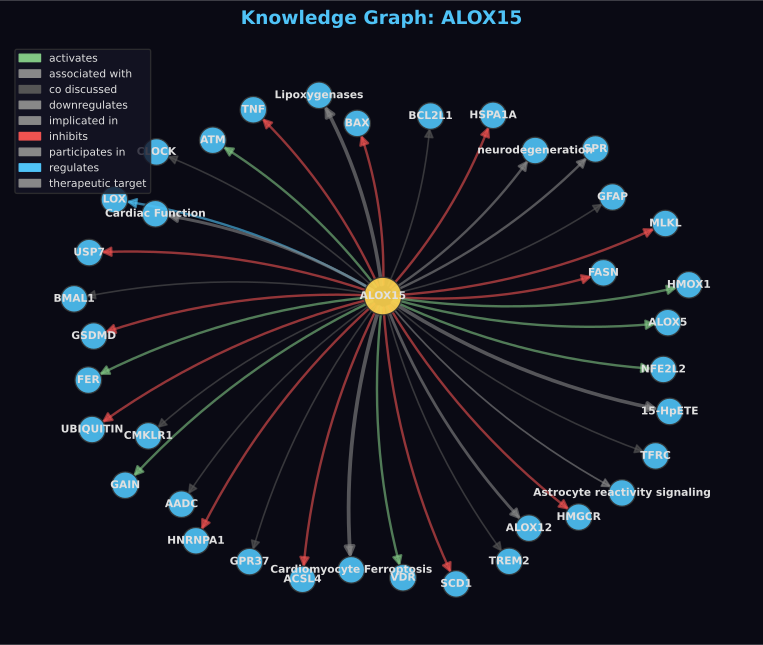
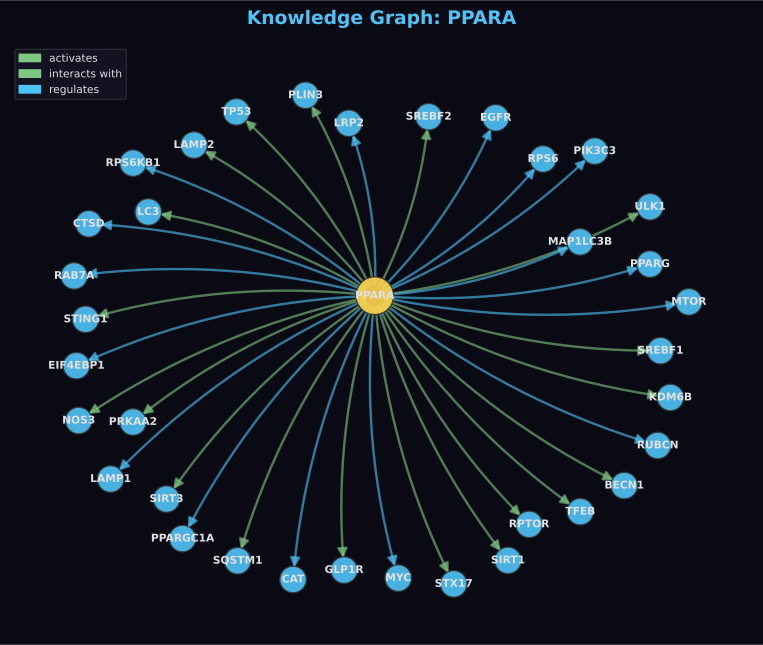
Knowledge Graph (281 edges)
Interactive visualization of molecular relationships discovered in this analysis. Drag nodes to rearrange, scroll to zoom, click entities to explore.
activates (10)
amplifies (1)
associated with (29)
▸ Show 24 more
causal extracted (7)
causes (21)
▸ Show 16 more
co discussed (167)
▸ Show 162 more
drives (1)
dysregulates (1)
enhances (1)
implicated in (6)
▸ Show 1 more
inhibits (3)
investigated in (1)
maintains (1)
participates in (3)
performs (1)
regulates (15)
risk factor for (3)
targets (1)
therapeutic target for (1)
vulnerable to (1)
Pathway Diagram
Key molecular relationships — gene/protein nodes color-coded by type
graph TD
    Trem2_Signaling["Trem2 Signaling"] -->|regulates| Microglial_Phagocytosis["Microglial Phagocytosis"]
    synaptic_loss["synaptic_loss"] -->|causes| Cognitive_decline["Cognitive decline"]
    apoe4["apoe4"] -->|associated with| AD_risk["AD risk"]
    apoe4_1["apoe4"] -->|causes| Lipid_Metabolism_Dysregul["Lipid Metabolism Dysregulation"]
    neuron["neuron"] -->|implicated in| Alzheimer_s_disease["Alzheimer's disease"]
    ACSL4["ACSL4"] -->|regulates| Ferroptosis_Sensitivity["Ferroptosis Sensitivity"]
    ACSL4_2["ACSL4"] -->|causes| LIPID_PEROXIDATION["LIPID_PEROXIDATION"]
    LPCAT3["LPCAT3"] -->|causes| ferroptotic_vulnerability["ferroptotic vulnerability"]
    LPCAT3_3["LPCAT3"] -->|regulates| arachidonoyl_CoA["arachidonoyl-CoA"]
    LPCAT3_4["LPCAT3"] -->|regulates| Lands_cycle_remodeling["Lands cycle remodeling"]
    LPCAT3_5["LPCAT3"] -->|causes| PUFA_PE["PUFA-PE"]
    Iron_Accumulation["Iron Accumulation"] -->|causes| oxidative_stress["oxidative_stress"]
    style Trem2_Signaling fill:#81c784,stroke:#333,color:#000
    style Microglial_Phagocytosis fill:#4fc3f7,stroke:#333,color:#000
    style synaptic_loss fill:#4fc3f7,stroke:#333,color:#000
    style Cognitive_decline fill:#4fc3f7,stroke:#333,color:#000
    style apoe4 fill:#ef5350,stroke:#333,color:#000
    style AD_risk fill:#ef5350,stroke:#333,color:#000
    style apoe4_1 fill:#ef5350,stroke:#333,color:#000
    style Lipid_Metabolism_Dysregul fill:#4fc3f7,stroke:#333,color:#000
    style neuron fill:#4fc3f7,stroke:#333,color:#000
    style Alzheimer_s_disease fill:#ef5350,stroke:#333,color:#000
    style ACSL4 fill:#ce93d8,stroke:#333,color:#000
    style Ferroptosis_Sensitivity fill:#4fc3f7,stroke:#333,color:#000
    style ACSL4_2 fill:#ce93d8,stroke:#333,color:#000
    style LIPID_PEROXIDATION fill:#4fc3f7,stroke:#333,color:#000
    style LPCAT3 fill:#ce93d8,stroke:#333,color:#000
    style ferroptotic_vulnerability fill:#4fc3f7,stroke:#333,color:#000
    style LPCAT3_3 fill:#ce93d8,stroke:#333,color:#000
    style arachidonoyl_CoA fill:#ce93d8,stroke:#333,color:#000
    style LPCAT3_4 fill:#ce93d8,stroke:#333,color:#000
    style Lands_cycle_remodeling fill:#4fc3f7,stroke:#333,color:#000
    style LPCAT3_5 fill:#ce93d8,stroke:#333,color:#000
    style PUFA_PE fill:#ce93d8,stroke:#333,color:#000
    style Iron_Accumulation fill:#4fc3f7,stroke:#333,color:#000
    style oxidative_stress fill:#4fc3f7,stroke:#333,color:#000
Figures & Visualizations (15)
Pathway Diagrams (2)
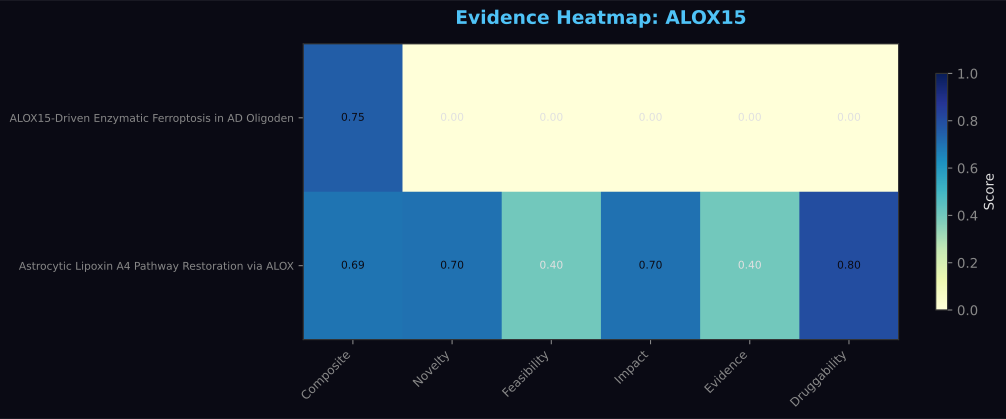
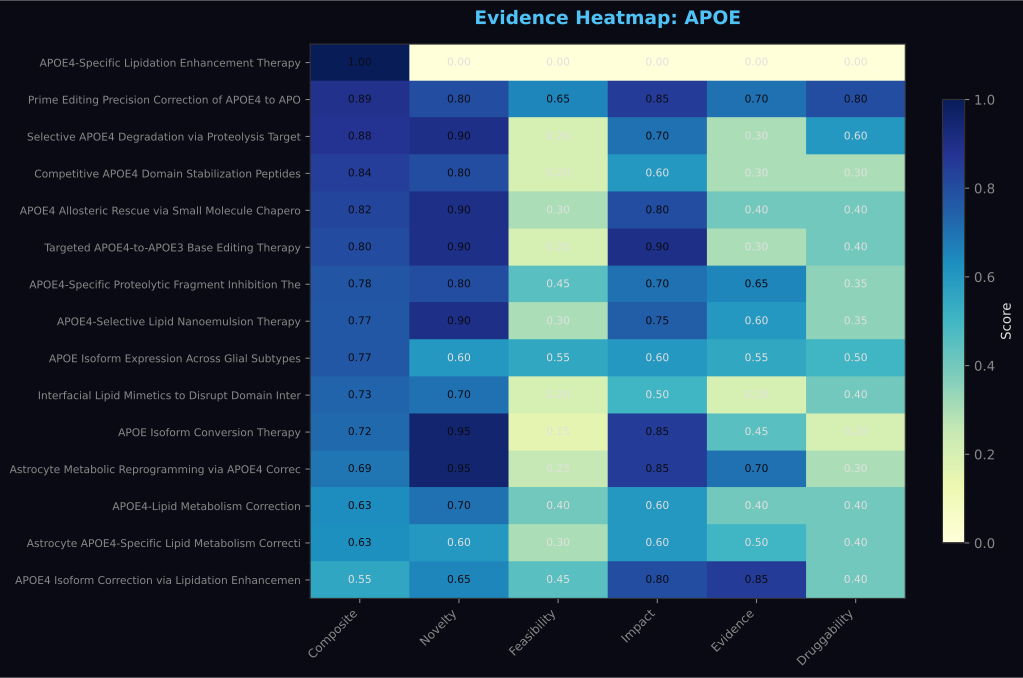
Score Comparisons (1)
Debate Impact (2)
Linked Wiki Pages (20)
Entities from this analysis that have detailed wiki pages