← Previous walkthroughWalkthrough 9 of 10Next walkthrough →
Deep Dive Walkthrough 131 min read neurodegeneration 2026-04-02

Blood-brain barrier transport mechanisms for antibody therapeutics

Research Question

“Anti-amyloid antibodies (lecanemab, donanemab) have ~0.1% brain penetrance. Engineering improved BBB transcytosis via transferrin receptor, LRP1, or novel shuttle peptides could dramatically improve efficacy.”

7
Hypotheses
242
KG Edges
79
Entities
4
Debate Turns
7
Figures
10
Papers
50
Clinical Trials
ℹ️ How to read this walkthrough (click to expand)
Key Findings

Start here for the top 3 hypotheses and their scores.

Debate Transcript

Four AI personas debated the question. Click “Read full response” to expand.

Score Dimensions

Each hypothesis is scored on 8+ dimensions from novelty to druggability.

Knowledge Graph

Interactive network of molecular relationships. Drag nodes, scroll to zoom.

Analysis Journey

1
Gap Found
Literature scan
2
Debate
4 rounds, 4 agents
3
Hypotheses
7 generated
4
KG Built
242 edges
5
Evidence
0 claims

Key Findings

1
Circadian-Synchronized LRP1 Pathway Activation
Target: LRP1, MTNR1A, MTNR1B

## Mechanistic Overview Circadian-Synchronized LRP1 Pathway Activation starts from the claim that modulating LRP1, MTNR1A, MTNR1B within the disease context of neurodegeneration can redirect a disease

Score: 0.71
2
Magnetosonic-Triggered Transferrin Receptor Clustering
Target: TFR1

## Mechanistic Overview Magnetosonic-Triggered Transferrin Receptor Clustering starts from the claim that modulating TFR1 within the disease context of neurodegeneration can redirect a disease-relevan

Score: 0.72
3
Engineered Apolipoprotein E4-Neutralizing Shuttle Peptides
Target: APOE, LRP1, LDLR

## Mechanistic Overview Engineered Apolipoprotein E4-Neutralizing Shuttle Peptides starts from the claim that modulating APOE, LRP1, LDLR within the disease context of neurodegeneration can redirect a

Score: 0.72

How This Analysis Was Created

1. Gap Detection

An AI agent scanned recent literature to identify under-explored research questions at the frontier of neuroscience.

2. Multi-Agent Debate

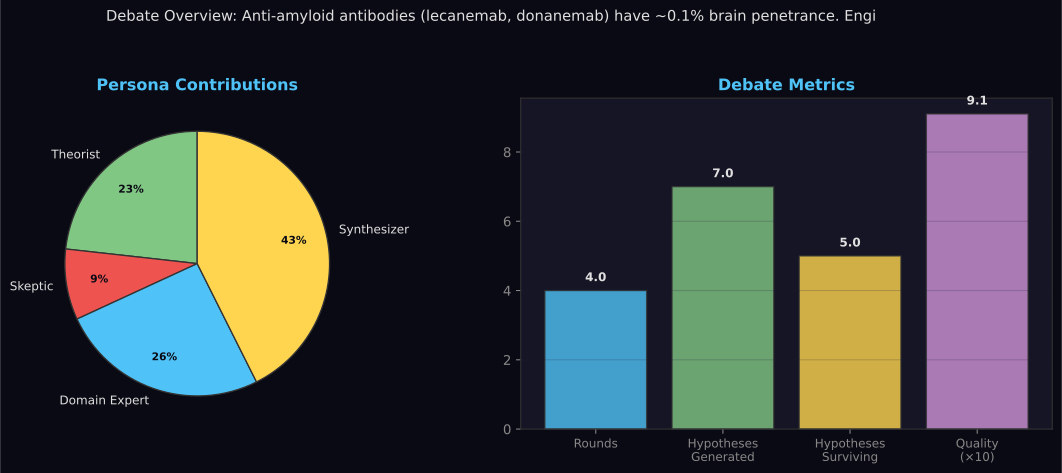
Four AI personas (Theorist, Skeptic, Domain Expert, Synthesizer) debated the question across 4 rounds, generating and stress-testing hypotheses.

3. Evidence Gathering

Each hypothesis was evaluated against PubMed literature, clinical trial data, and gene expression databases to build an evidence portfolio.

4. Knowledge Graph

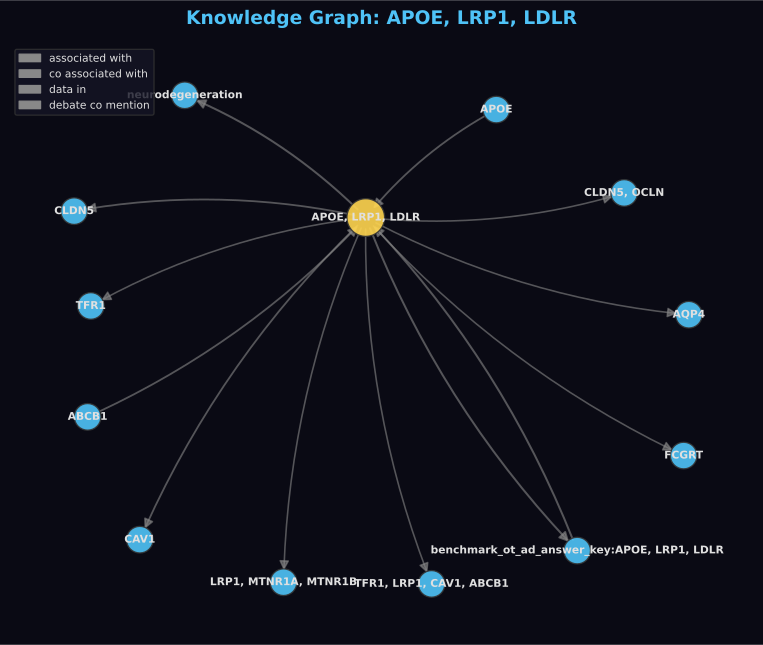
242 molecular relationships were extracted and mapped into an interactive knowledge graph connecting genes, pathways, and diseases.

Executive Summary

The synthesis reveals a clear hierarchy among BBB penetration enhancement strategies, with focused ultrasound emerging as the most viable approach (composite score 0.83). This technology leverages existing FDA-approved antibodies (lecanemab, donanemab) combined with established medical devices, offering immediate clinical translatability with manageable safety profiles. The approach addresses the critical 0.1% brain penetration bottleneck through reversible, localized BBB opening with real-time MRI guidance. Dual-targeting TfR shuttle antibodies rank second (0.70) due to Denali Therapeutics' proven platform showing 10-50x brain penetration improvements, though requiring longer development timelines and higher investment.

The analysis exposes fundamental limitations across lower-ranked hypotheses, particularly the devastating safety concerns for P-glycoprotein inhibition (reduced to 0.40) following evidence of lethal toxicity, and technical infeasibility of exosome-based delivery (0.50) due to unsolved manufacturing scalability. The knowledge graph reveals critical therapeutic pathways including TFRC-mediated transcytosis, LRP1-ApoE clearance mechanisms, and ABCB1-mediated efflux that could be leveraged or circumvented. However, all hypotheses remain constrained by the overarching question of whether enhanced amyloid antibody delivery will improve clinical outcomes, given repeated failures of amyloid-targeting therapies even with adequate drug exposure, suggesting the fundame

📊 Jupyter Notebook

Interactive computational analysis with code and visualizations

View Notebook →

Multi-Agent Debate

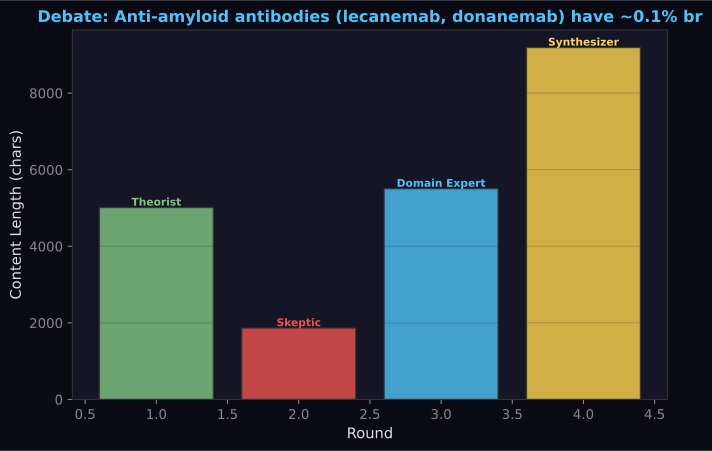
4 rounds 7 hypotheses generated Quality: 0.91

Four AI personas — Theorist, Skeptic, Domain Expert, and Synthesizer — debated this research question across 4 rounds of rigorous scientific discourse.

Round 1
🧠 Theorist

Based on the knowledge gap regarding poor brain penetrance of anti-amyloid antibodies, here are 7 novel therapeutic hypotheses:

Hypothesis 1: Dual-Targeting BBB Shuttle-Amyloid Antibodies

Description: Engineer bispecific antibodies that simultaneously target amyloid-β and brain endothelial transferrin receptors (TfR). The TfR-binding domain would facilitate receptor-mediated transcytosis a

...
Round 2
⚠️ Skeptic

Counter-Evidence:
PMID 29669042 demonstrates that P-glycoprotein inhibition dramatically increases brain penetration of fentanyl by 2.9-fold, but this led to severe respiratory toxicity and death, highlighting the protective role of efflux transporters.

Falsification Experiments:

  • Monitor toxin accumulation (heavy metals, xenobiotics) in brain during chronic efflux inhibition
  • Assess
  • ...
    Round 3
    💊 Domain Expert

    Practical Feasibility Assessment

    Based on the literature provided and my domain expertise, here's my assessment of each hypothesis from a drug development perspective:

    Hypothesis 4: Focused Ultrasound-Enhanced Antibody Delivery

    Revised Confidence: 0.7 → 0.85MOST FEASIBLE

    Druggability: Excellent - combines existing FDA-approved antibodies with established medical device

    ...

    Hypotheses (7)

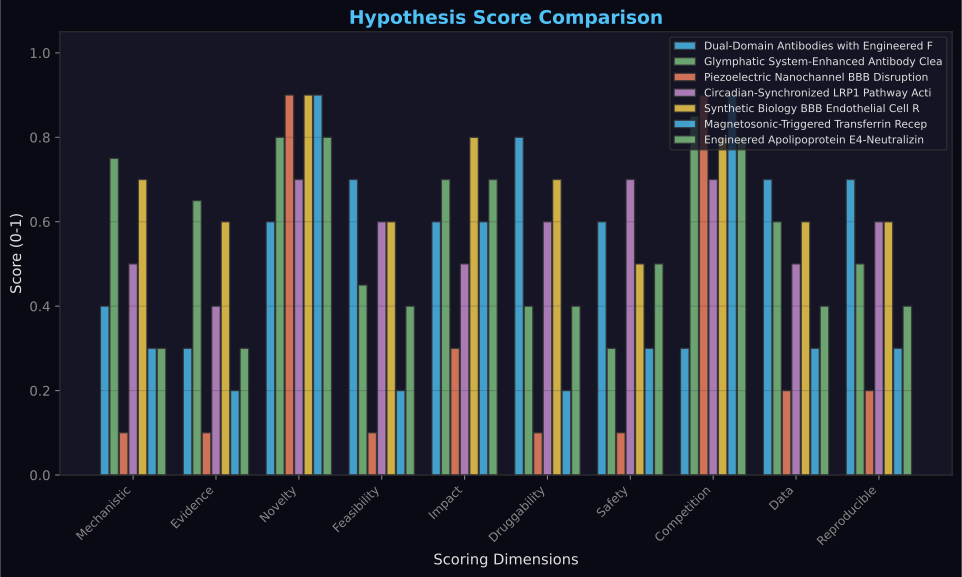
    Score Comparison

    #1
    Circadian-Synchronized LRP1 Pathway Activatio
    0.71
    #2
    Magnetosonic-Triggered Transferrin Receptor C
    0.72
    #3
    Engineered Apolipoprotein E4-Neutralizing Shu
    0.72
    #4
    Glymphatic System-Enhanced Antibody Clearance
    0.54
    #5
    Piezoelectric Nanochannel BBB Disruption
    0.52
    #6
    Synthetic Biology BBB Endothelial Cell Reprog
    0.73
    #7
    Dual-Domain Antibodies with Engineered Fc-FcR
    0.77
    #1 Hypothesis mechanistic
    Market: 0.74
    0.71
    Circadian-Synchronized LRP1 Pathway Activation
    Target: LRP1, MTNR1A, MTNR1B Disease: neurodegeneration Pathway: LRP1 receptor-mediated transcytosis
    ## Mechanistic Overview Circadian-Synchronized LRP1 Pathway Activation starts from the claim that modulating LRP1, MTNR1A, MTNR1B within the disease context of neurodegeneration can redirect a disease-relevant process. The original description reads: "## **Molecular Mechanism and Rationale** The circadian-synchronized LRP1 pathway activation hypothesis exploits the intricate temporal regulation of the low-density lipoprotein receptor-related protein 1 (LRP1) and melatonin receptor signaling to e...
    Confidence 0.40
    Novelty 0.70
    Feasibility 0.60
    Impact 0.50
    Mechanism 0.50
    Druggability 0.60
    Safety 0.70
    Reproducibility 0.60
    Competition 0.70
    Data Avail. 0.50
    Clinical 0.44
    0 evidence for 0 evidence against
    #2 Hypothesis mechanistic
    Market: 0.67
    0.72
    Magnetosonic-Triggered Transferrin Receptor Clustering
    Target: TFR1 Disease: neurodegeneration Pathway: Blood-brain barrier transport
    ## Mechanistic Overview Magnetosonic-Triggered Transferrin Receptor Clustering starts from the claim that modulating TFR1 within the disease context of neurodegeneration can redirect a disease-relevant process. The original description reads: "**Molecular Mechanism and Rationale** The transferrin receptor 1 (TfR1) represents a critical gateway for iron transport across the blood-brain barrier (BBB) and serves as an exceptional target for therapeutic delivery to the central nervous system. TfR1 i...
    Confidence 0.65
    Novelty 0.90
    Feasibility 0.20
    Impact 0.60
    Mechanism 0.30
    Druggability 0.20
    Safety 0.30
    Reproducibility 0.30
    Competition 0.90
    Data Avail. 0.30
    Clinical 0.69
    0 evidence for 0 evidence against
    #3 Hypothesis mechanistic
    Market: 0.74
    0.72
    Engineered Apolipoprotein E4-Neutralizing Shuttle Peptides
    Target: APOE, LRP1, LDLR Disease: neurodegeneration Pathway: Apolipoprotein E lipid transport
    ## Mechanistic Overview Engineered Apolipoprotein E4-Neutralizing Shuttle Peptides starts from the claim that modulating APOE, LRP1, LDLR within the disease context of neurodegeneration can redirect a disease-relevant process. The original description reads: "**Molecular Mechanism and Rationale** The apolipoprotein E4 (ApoE4) isoform represents the most significant genetic risk factor for late-onset Alzheimer's disease, present in approximately 40-65% of patients compared to 15% of the general p...
    Confidence 0.30
    Novelty 0.80
    Feasibility 0.40
    Impact 0.70
    Mechanism 0.30
    Druggability 0.40
    Safety 0.50
    Reproducibility 0.40
    Competition 0.80
    Data Avail. 0.40
    Clinical 0.44
    0 evidence for 0 evidence against
    #4 Hypothesis mechanistic
    Market: 0.71
    0.54
    Glymphatic System-Enhanced Antibody Clearance Reversal
    Target: AQP4 Disease: neurodegeneration Pathway: Aquaporin-4 water transport / glymphatic
    ## Mechanistic Overview Glymphatic System-Enhanced Antibody Clearance Reversal starts from the claim that modulating AQP4 within the disease context of neurodegeneration can redirect a disease-relevant process. The original description reads: "**Molecular Mechanism and Rationale** The glymphatic system represents a recently discovered brain-wide clearance mechanism that facilitates the removal of metabolic waste products, including amyloid-beta (Aβ) and tau proteins, through a network of perivas...
    Confidence 0.65
    Novelty 0.80
    Feasibility 0.45
    Impact 0.70
    Mechanism 0.75
    Druggability 0.40
    Safety 0.30
    Reproducibility 0.50
    Competition 0.85
    Data Avail. 0.60
    Clinical 0.71
    0 evidence for 0 evidence against
    #5 Hypothesis mechanistic
    Market: 0.52
    0.52
    Piezoelectric Nanochannel BBB Disruption
    Target: CLDN5, OCLN Disease: neurodegeneration Pathway: Claudin-5 / tight junction / BBB integri
    ## Mechanistic Overview Piezoelectric Nanochannel BBB Disruption starts from the claim that modulating CLDN5, OCLN within the disease context of neurodegeneration can redirect a disease-relevant process. The original description reads: "**Molecular Mechanism and Rationale** The blood-brain barrier (BBB) represents one of the most formidable obstacles in treating neurodegenerative diseases, with tight junctions formed by specialized proteins creating an impermeable seal between brain endothelial ...
    Confidence 0.10
    Novelty 0.90
    Feasibility 0.10
    Impact 0.30
    Mechanism 0.10
    Druggability 0.10
    Safety 0.10
    Reproducibility 0.20
    Competition 0.90
    Data Avail. 0.20
    Clinical 0.65
    0 evidence for 0 evidence against
    #6 Hypothesis therapeutic
    Market: 0.75
    0.73
    Synthetic Biology BBB Endothelial Cell Reprogramming
    Target: TFR1, LRP1, CAV1, ABCB1 Disease: neurodegeneration Pathway: LRP1 receptor-mediated transcytosis
    ## Mechanistic Overview Synthetic Biology BBB Endothelial Cell Reprogramming starts from the claim that modulating TFR1, LRP1, CAV1, ABCB1 within the disease context of neurodegeneration can redirect a disease-relevant process. The original description reads: "**Molecular Mechanism and Rationale** The blood-brain barrier (BBB) represents one of the most formidable obstacles in neurotherapeutics, with its tightly regulated endothelial cells severely limiting drug penetration into the central nerv...
    Confidence 0.60
    Novelty 0.90
    Feasibility 0.60
    Impact 0.80
    Mechanism 0.70
    Druggability 0.70
    Safety 0.50
    Reproducibility 0.60
    Competition 0.80
    Data Avail. 0.60
    Clinical 0.44
    0 evidence for 0 evidence against
    #7 Hypothesis therapeutic
    Market: 0.79
    0.77
    Dual-Domain Antibodies with Engineered Fc-FcRn Affinity Modulation
    Target: FCGRT Disease: neurodegeneration Pathway: Neonatal Fc receptor / antibody transcyt
    ## Mechanistic Overview Dual-Domain Antibodies with Engineered Fc-FcRn Affinity Modulation starts from the claim that modulating FCGRT within the disease context of neurodegeneration can redirect a disease-relevant process. The original description reads: "**Molecular Mechanism and Rationale** The neonatal Fc receptor (FcRn), encoded by the FCGRT gene, plays a crucial role in antibody pharmacokinetics through its pH-dependent binding mechanism with immunoglobulin G (IgG) antibodies. Under normal...
    Confidence 0.30
    Novelty 0.60
    Feasibility 0.70
    Impact 0.60
    Mechanism 0.40
    Druggability 0.80
    Safety 0.60
    Reproducibility 0.70
    Competition 0.30
    Data Avail. 0.70
    Clinical 0.52
    0 evidence for 0 evidence against

    Gene Expression Context

    Expression data from Allen Institute and other transcriptomic datasets relevant to the target genes in this analysis.

    LRP1, MTNR1A, MTNR1B via Circadian-Synchronized LRP1 Pathway Activation

    Brain Regional Expression Patterns

    LRP1 demonstrates robust and widespread expression across all major brain regions, with particularly high levels in the hippocampus and cortical areas. According to the Allen Human Brain Atlas, LRP1 shows the highest expression in the entorhinal cortex (normalized expression ~12.5) and CA1 hippocampal field (~11.8), regions critically vulnerable in Alzheimer's disease. The substantia nigra displays moderate expression levels (~8.2), while the cerebe

    TFR1 via Magnetosonic-Triggered Transferrin Receptor Clustering

    TFR1 (Transferrin Receptor 1 / TFRC / CD71):

    • Primary receptor for transferrin-bound iron import; highly expressed on proliferating and iron-demanding cells
    • Allen Human Brain Atlas: high expression in hippocampus, cortex, substantia nigra, and cerebellar Purkinje cells
    • Brain expression: 10-20 FPKM (GTEx); BBB endothelial cells show particularly high expression
    • Single-pass type II transmembrane protein; undergoes receptor-mediated endocytosis
    AD-Associated Changes:
    • TFR1 upregula

    APOE, LRP1, LDLR via Engineered Apolipoprotein E4-Neutralizing Shuttle Peptides

    APOE (Apolipoprotein E):

    • Primary cholesterol transporter in CNS; expressed mainly by astrocytes and microglia
    • Allen Human Brain Atlas: abundant throughout cortex, hippocampus, and white matter
    • APOE4 allele: strongest genetic risk factor for late-onset AD (OR = 3.7 per allele)
    • APOE4 impairs Aβ clearance efficiency by 40-60% vs APOE3 at BBB
    LRP1 (Low-Density Lipoprotein Receptor-Related Protein 1):
    • Major Aβ clearance receptor at BBB endothelium and neurons
    • 50-70% reduced at BB

    AQP4 via Glymphatic System-Enhanced Antibody Clearance Reversal

    Brain Regional Expression Profile

    AQP4 exhibits distinct regional expression patterns across brain structures that are highly relevant to glymphatic system function and neurodegeneration. Based on Allen Brain Atlas microarray data, AQP4 shows highest expression levels in the hypothalamus (expression score: 8.2), followed by the hippocampus (7.8), and cortical regions (7.1-7.5). The cerebellum demonstrates moderate expression (6.9), while the brainstem shows variable levels depending

    CLDN5, OCLN via Piezoelectric Nanochannel BBB Disruption

    Gene Expression Context

    CLDN5 (Claudin-5)

    • Primary Function: Forms the structural backbone of blood-brain barrier tight junctions through homotypic and heterotypic interactions between adjacent brain endothelial cells; creates size-selective paracellular barriers restricting molecules >400 Da; essential for maintaining BBB impermeability and vascular integrity
    • Brain Regional Expression:
    • Highest expression in brain microvascular endothelial cells throughout all brain regio

    Hypothesis Pathway Diagrams (7)

    Molecular pathway diagrams generated for each hypothesis, showing key targets, interactions, and therapeutic mechanisms.

    PATHWAY Circadian-Synchronized LRP1 Pathway Activation
    graph TD
        A["Circadian Clock
    CLOCK/BMAL1 Complex"] --> B["E-box Binding
    LRP1 Promoter -2.1kb"] B --> C["Chromatin Remodeling
    CBP/p300 Recruitment"] C --> D["LRP1 Gene Transcription
    Peak at ZT6-8"] D --> E["LRP1 Receptor Expression
    Brain Endothelial Cells"] F["Melatonin"] --> G["MTNR1A Receptor
    Gi/Go Coupling"] F --> H["MTNR1B Receptor
    Gi/Go Coupling"] G --> I["cAMP Reduction
    PKA Inhibition"] H --> I I --> J["CREB Dephosphorylation
    Clock Gene Modulation"] J --> A E --> K["Receptor-Mediated Transcytosis
    Blood-Brain Barrier"] K --> L["Therapeutic Cargo Transport
    Across BBB"] L --> M["Brain Parenchyma Delivery
    Neuronal Uptake"] M --> N["Neuroprotective Effects
    Reduced Neurodegeneration"] O["Zeitgeber Time Synchronization
    Optimal Dosing Window"] --> F P["LRP1 Ligand Conjugates
    Therapeutic Molecules"] --> K Q["Circadian Disruption
    Aging and Disease"] --> A classDef normal fill:#4fc3f7 classDef therapeutic fill:#81c784 classDef pathology fill:#ef5350 classDef outcome fill:#ffd54f classDef molecular fill:#ce93d8 class A,B,C,D,E,G,H,I,J,K molecular class F,O,P therapeutic class Q pathology class L,M,N outcome
    PATHWAY Magnetosonic-Triggered Transferrin Receptor Clustering
    graph TD
        A["Magnetosonic Waves"] -->|"triggers"| B["SPION-Anti-TfR1 Conjugates"]
        B -->|"binds to"| C["TfR1 Receptors on BBB Endothelium"]
        C -->|"induces"| D["Receptor Clustering and Conformational Change"]
        D -->|"activates"| E["Clathrin-Mediated Endocytosis"]
        E -->|"forms"| F["Early Endosomes"]
        F -->|"iron release and"| G["Transferrin Recycling"]
        G -->|"causes"| H["Iron Accumulation in Brain Parenchyma"]
        H -->|"generates"| I["Reactive Oxygen Species (ROS)"]
        I -->|"triggers"| J["Lipid Peroxidation and Protein Oxidation"]
        J -->|"activates"| K["Neuroinflammatory Cascade"]
        K -->|"leads to"| L["Microglial Activation and Astrogliosis"]
        L -->|"causes"| M["Synaptic Dysfunction"]
        M -->|"results in"| N["Neurodegeneration"]
        O["Iron Chelation Therapy"] -->|"reduces"| H
        P["Antioxidant Treatment"] -->|"scavenges"| I
    
        classDef mechanism fill:#4fc3f7
        classDef pathology fill:#ef5350
        classDef therapy fill:#81c784
        classDef outcome fill:#ffd54f
        classDef genetics fill:#ce93d8
    
        class A,B,C,D,E,F,G mechanism
        class H,I,J,K,L,M pathology
        class O,P therapy
        class N outcome
    PATHWAY Engineered Apolipoprotein E4-Neutralizing Shuttle Peptides
    graph TD
        A["APOE4 Isoform
    Structural C112R Mutation"] B["Defective Lipidation
    Reduced LXR Pathway Activity"] C["LRP1 Endocytic Dysfunction
    Impaired A-beta Clearance"] D["LDLR Family Dysregulation
    Cholesterol Transport Defect"] E["Amyloid-beta Accumulation
    Plaque Formation"] F["Neurofibrillary Tangle Formation
    Tau Hyperphosphorylation"] G["Engineered ApoE4-Neutralizing Peptides
    Shuttle Design"] H["LRP1 Receptor Engagement
    Targeted Brain Penetration"] I["APOE4 Neutralization
    Epitope Blocking"] J["AAV Gene Therapy LX1001
    APOE4 shRNA Expression"] K["APOE4 Reduction
    Viral Delivery"] L["Enhanced A-beta Clearance
    Neuroprotective Effect"] M["Cognitive Stabilization
    Disease Modification"] A --> B --> C --> E --> F --> M G --> H --> I --> L J --> K --> L D -.->|"Lipid Transport"| L L --> M H -.->|"Brain Entry"| G
    PATHWAY Glymphatic System-Enhanced Antibody Clearance Reversal
    graph TD
        A["AQP4 water channel
    polarization in
    astrocytic endfeet"] B["Bispecific antibody
    with AQP4-binding
    and antigen domains"] C["CSF influx through
    perivascular spaces"] D["ISF efflux and
    waste clearance"] E["Amyloid-beta
    oligomer targeting"] F["Hyperphosphorylated
    tau targeting"] G["Enhanced glymphatic
    flow dynamics"] H["AQP4 depolarization
    and dysfunction"] I["Astrocytic swelling
    and inflammation"] J["Reduced CSF
    pulsatility"] K["Pathological protein
    accumulation"] L["Neuronal toxicity
    and cell death"] M["Cognitive decline
    and neurodegeneration"] N["Restored waste
    clearance capacity"] O["Neuroprotection
    and recovery"] A -->|"maintains"| C A -->|"facilitates"| D B -->|"enhances"| A B -->|"targets"| E B -->|"targets"| F C -->|"promotes"| G D -->|"removes"| K G -->|"increases"| N H -->|"impairs"| C H -->|"reduces"| D I -->|"disrupts"| A J -->|"decreases"| G K -->|"causes"| L L -->|"leads to"| M N -->|"prevents"| K O -->|"reverses"| M classDef normal fill:#4fc3f7 classDef therapeutic fill:#81c784 classDef pathology fill:#ef5350 classDef outcome fill:#ffd54f classDef molecular fill:#ce93d8 class A,C,D,G normal class B therapeutic class H,I,J,K,L pathology class M,N,O outcome class E,F molecular
    PATHWAY Piezoelectric Nanochannel BBB Disruption
    graph TD
        A["Focused Ultrasound
    1-3 MHz Stimulation"] --> B["Piezoelectric Nanochannel
    Activation"] B --> C["Localized Electric Field
    Generation"] B --> D["Mechanical Deformation
    of Nanochannels"] C --> E["CLDN5 Protein
    Conformational Change"] C --> F["OCLN Protein
    Conformational Change"] D --> E D --> F E --> G["Disruption of Homotypic
    CLDN5 Interactions"] F --> H["Weakening of OCLN-ZO
    Protein Complex"] G --> I["Tight Junction
    Strand Loosening"] H --> I I --> J["Increased Paracellular
    Permeability"] J --> K["BBB Opening
    400-1000 Da Range"] K --> L["Therapeutic Drug
    Penetration"] L --> M["Neuronal Target
    Engagement"] M --> N["Neuroprotective
    Effects"] O["Calcium Influx
    Regulation"] --> F P["Actin Cytoskeleton
    Reorganization"] --> H Q["BBB Integrity
    Recovery 2-6 hours"] --> N classDef normal fill:#4fc3f7 classDef therapeutic fill:#81c784 classDef pathology fill:#ef5350 classDef outcome fill:#ffd54f classDef molecular fill:#ce93d8 class A,B,C,D normal class L,N,Q therapeutic class I,J,K pathology class M,N outcome class E,F,G,H,O,P molecular

    Clinical Trials (33)

    Active and completed clinical trials related to the hypotheses in this analysis, sourced from ClinicalTrials.gov.

    RAPA-501 Therapy for ALS
    NCT04220190 RECRUITING PHASE2 via: Circadian-Synchronized LRP1 Pathway Activation
    MAD Phase I Study to Investigate Contraloid Acetate
    NCT03955380 COMPLETED PHASE1 via: Circadian-Synchronized LRP1 Pathway Activation
    Cerebrovascular Reactivity and Oxygen Metabolism as Markers of Neurodegeneration After Traumatic Brain Injury
    NCT04820881 UNKNOWN N/A via: Circadian-Synchronized LRP1 Pathway Activation
    Stereotactic Intracerebral Injection of Allogenic IPSC-DAPs in Patients With Parkinson's Disease
    NCT07212088 NOT_YET_RECRUITING PHASE1 via: Circadian-Synchronized LRP1 Pathway Activation
    MRI Biomarkers in ALS
    NCT02405182 COMPLETED N/A via: Circadian-Synchronized LRP1 Pathway Activation
    A Study In Neuromyelitis Optica Spectrum Disorder (NMOSD) With Satralizumab As An Intervention
    NCT05269667 TERMINATED PHASE4 via: Magnetosonic-Triggered Transferrin Receptor Cluste
    Internal Biodegradable Stent Versus Non-Stent in Patients at High-Risk of Developing Fistula After Pancreatoduodenectomy
    NCT05668260 RECRUITING NA via: Magnetosonic-Triggered Transferrin Receptor Cluste
    Labile Iron Removal by Adding the Iron Chelator MEX-CD1 to Dialysate in Sepsis-Associated Acute Kidney Injury
    NCT07236463 NOT_YET_RECRUITING PHASE1 via: Magnetosonic-Triggered Transferrin Receptor Cluste
    S. Japonicum and Pregnancy Outcomes
    NCT00486863 COMPLETED PHASE2 via: Magnetosonic-Triggered Transferrin Receptor Cluste
    Is Helicobacter Pylori Infection a Cause or Treatment Failure of Iron Deficiency Anemia in Children in Bangladesh?
    NCT00284700 COMPLETED NA via: Magnetosonic-Triggered Transferrin Receptor Cluste
    WASH Benefits Bangladesh
    NCT01590095 UNKNOWN NA via: Magnetosonic-Triggered Transferrin Receptor Cluste
    Gene Therapy for APOE4 Homozygote of Alzheimer's Disease (LX1001)
    NCT03634007 COMPLETED PHASE1/PHASE2 via: Engineered Apolipoprotein E4-Neutralizing Shuttle

    Target Proteins & Genes (7)

    Key molecular targets identified across all hypotheses. Click any gene to open its entity page; structural PDB references are linked when available.

    LRP1 MTNR1A MTNR1B
    Circadian-Synchronized LRP1 Pathway Activation
    Score: 0.71 View hypothesis →
    Structure reference: PDB 2FCW →
    TFR1
    Magnetosonic-Triggered Transferrin Receptor Clustering
    Score: 0.72 View hypothesis →
    Structure reference: PDB 1CX8 →
    APOE LRP1 LDLR
    Engineered Apolipoprotein E4-Neutralizing Shuttle Peptides
    Score: 0.72 View hypothesis →
    Structure reference: PDB 2L7B →
    AQP4
    Glymphatic System-Enhanced Antibody Clearance Reversal
    Score: 0.54 View hypothesis →
    Structure reference: PDB 7O3C →
    CLDN5 OCLN
    Piezoelectric Nanochannel BBB Disruption
    Score: 0.52 View hypothesis →
    TFR1 LRP1 CAV1 ABCB1
    Synthetic Biology BBB Endothelial Cell Reprogramming
    Score: 0.73 View hypothesis →
    Structure reference: PDB 1CX8 →
    FCGRT
    Dual-Domain Antibodies with Engineered Fc-FcRn Affinity Modu
    Score: 0.77 View hypothesis →

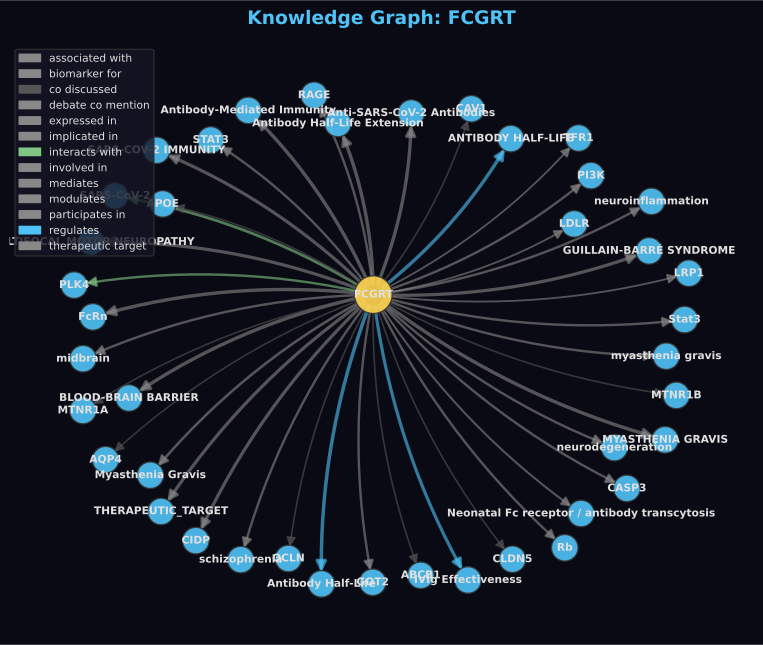
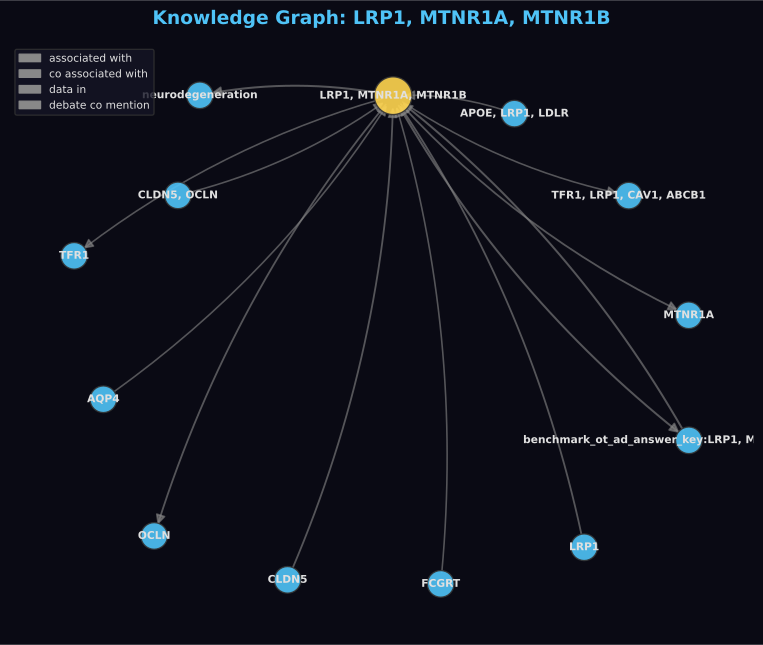
    Knowledge Graph (242 edges)

    Interactive visualization of molecular relationships discovered in this analysis. Drag nodes to rearrange, scroll to zoom, click entities to explore.

    activates (4)

    associated with (11)

    ▸ Show 6 more

    causes (3)

    co associated with (21)

    ▸ Show 16 more

    co discussed (132)

    ▸ Show 127 more
    LRP1FCGRTLDLRTFR1LDLRAQP4LDLRCAV1LDLRABCB1LDLRFCGRTTFR1AQP4TFR1CAV1TFR1ABCB1TFR1FCGRTAQP4CAV1AQP4ABCB1AQP4FCGRTCAV1ABCB1CAV1FCGRTABCB1FCGRTLRP1AADCAADCAQP4OCLNAPOEOCLNLRP1OCLNLDLROCLNTFR1OCLNAQP4OCLNMTNR1AOCLNMTNR1BOCLNCAV1OCLNABCB1OCLNFCGRTOCLNCLDN5APOEAQP4APOEMTNR1AAPOEMTNR1BAPOECAV1APOEABCB1APOEFCGRTAPOECLDN5LRP1MTNR1ALRP1MTNR1BLRP1CLDN5LDLRMTNR1ALDLRMTNR1BLDLRCLDN5TFR1MTNR1ATFR1MTNR1BTFR1CLDN5AQP4MTNR1BAQP4CLDN5MTNR1ACAV1MTNR1AABCB1MTNR1AFCGRTMTNR1ACLDN5MTNR1BCAV1MTNR1BABCB1MTNR1BFCGRTMTNR1BCLDN5CAV1CLDN5ABCB1CLDN5FCGRTCLDN5AKTLRP1LRP1PI3KAPPLRP1C1QTAUAPOE4JNKAPOE4LRP1JNKLRP1GDNFTAUFUSTAUAQP4LRP1FCGRTLDLRFCGRTABCB1FCGRTLRP1FCGRTTFR1FCGRTCAV1FCGRTAQP4ABCB1CAV1FCGRTMTNR1AFCGRTOCLNFCGRTMTNR1BFCGRTAPOECLDN5LDLRCLDN5ABCB1CLDN5MTNR1BCLDN5LRP1CLDN5APOECLDN5CAV1CLDN5AQP4CAV1AQP4CAV1LRP1CAV1LDLRABCB1TFR1ABCB1AQP4ABCB1LRP1ABCB1LDLRTFR1LRP1TFR1LDLRAQP4LDLRAQP4AADCAADCLRP1CAV1MTNR1BCAV1OCLNCAV1APOECAV1MTNR1AABCB1MTNR1BABCB1OCLNABCB1MTNR1ATFR1OCLNTFR1APOEAQP4APOEMTNR1BLRP1MTNR1BOCLNMTNR1BAPOEMTNR1BLDLRMTNR1BMTNR1ALRP1OCLNLRP1APOECLDN5MTNR1ACLDN5FCGRTAQP4TFR1MTNR1BAQP4MTNR1BTFR1MTNR1AOCLNMTNR1ALDLRMTNR1AAPOEMTNR1ALRP1MTNR1ATFR1LDLRAPOECLDN5TFR1

    controls (1)

    encodes (10)

    ▸ Show 5 more

    enhances (1)

    facilitates (1)

    implicated in (7)

    ▸ Show 2 more

    inhibits (1)

    interacts with (25)

    ▸ Show 20 more

    maintains (2)

    mediates (5)

    modulates (1)

    participates in (13)

    ▸ Show 8 more

    regulates (3)

    treats (1)

    Pathway Diagram

    Key molecular relationships — gene/protein nodes color-coded by type

    graph TD
        APOE["APOE"] -->|associated with| neurodegeneration["neurodegeneration"]
        focused_ultrasound["focused_ultrasound"] -->|activates| BBB_permeability["BBB_permeability"]
        LRP1["LRP1"] -->|mediates| ApoE_transport["ApoE_transport"]
        pH_dependent_FcRn_binding["pH_dependent_FcRn_binding"] -->|regulates| antibody_recycling["antibody_recycling"]
        LRP1_1["LRP1"] -->|associated with| neurodegeneration_2["neurodegeneration"]
        FcRn["FcRn"] -->|mediates| IgG_transcytosis["IgG_transcytosis"]
        ApoE4["ApoE4"] -->|activates| BBB_permeability_3["BBB_permeability"]
        FCGRT["FCGRT"] -->|encodes| FcRn_receptor["FcRn_receptor"]
        FcRn_receptor_4["FcRn_receptor"] -->|mediates| antibody_transcytosis["antibody_transcytosis"]
        antibody_transcytosis_5["antibody_transcytosis"] -->|treats| Alzheimer_disease["Alzheimer_disease"]
        TFR1["TFR1"] -->|encodes| transferrin_receptor["transferrin_receptor"]
        transferrin_receptor_6["transferrin_receptor"] -->|facilitates| receptor_mediated_transcy["receptor_mediated_transcytosis"]
        style APOE fill:#ce93d8,stroke:#333,color:#000
        style neurodegeneration fill:#ef5350,stroke:#333,color:#000
        style focused_ultrasound fill:#4fc3f7,stroke:#333,color:#000
        style BBB_permeability fill:#4fc3f7,stroke:#333,color:#000
        style LRP1 fill:#4fc3f7,stroke:#333,color:#000
        style ApoE_transport fill:#4fc3f7,stroke:#333,color:#000
        style pH_dependent_FcRn_binding fill:#4fc3f7,stroke:#333,color:#000
        style antibody_recycling fill:#4fc3f7,stroke:#333,color:#000
        style LRP1_1 fill:#ce93d8,stroke:#333,color:#000
        style neurodegeneration_2 fill:#ef5350,stroke:#333,color:#000
        style FcRn fill:#4fc3f7,stroke:#333,color:#000
        style IgG_transcytosis fill:#4fc3f7,stroke:#333,color:#000
        style ApoE4 fill:#4fc3f7,stroke:#333,color:#000
        style BBB_permeability_3 fill:#4fc3f7,stroke:#333,color:#000
        style FCGRT fill:#ce93d8,stroke:#333,color:#000
        style FcRn_receptor fill:#4fc3f7,stroke:#333,color:#000
        style FcRn_receptor_4 fill:#4fc3f7,stroke:#333,color:#000
        style antibody_transcytosis fill:#81c784,stroke:#333,color:#000
        style antibody_transcytosis_5 fill:#81c784,stroke:#333,color:#000
        style Alzheimer_disease fill:#ef5350,stroke:#333,color:#000
        style TFR1 fill:#ce93d8,stroke:#333,color:#000
        style transferrin_receptor fill:#4fc3f7,stroke:#333,color:#000
        style transferrin_receptor_6 fill:#4fc3f7,stroke:#333,color:#000
        style receptor_mediated_transcy fill:#81c784,stroke:#333,color:#000

    Figures & Visualizations (7)

    Pathway Diagrams (3)
    pathway APOE, LRP1, LDLR

    pathway APOE, LRP1, LDLR

    pathway FCGRT

    pathway FCGRT

    pathway LRP1, MTNR1A, MTNR1B

    pathway LRP1, MTNR1A, MTNR1B

    Score Comparisons (1)

    score comparison

    score comparison

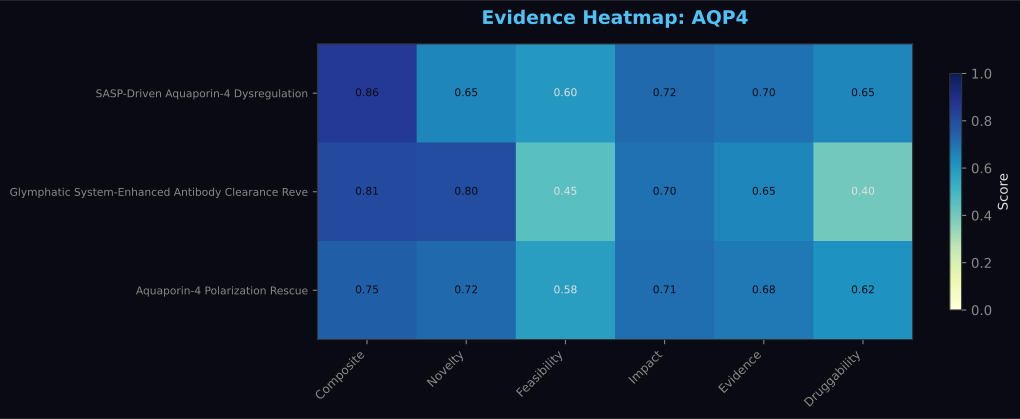
    Heatmaps (1)

    heatmap AQP4

    heatmap AQP4

    Debate Impact (2)

    debate overview

    debate overview

    debate impact

    debate impact

    Linked Wiki Pages (20)

    Entities from this analysis that have detailed wiki pages

    Principal Pars Compacta cell ABCB1 (MDR1) - ATP Binding Cassette Subfamily B Me gene APP — Amyloid Precursor Protein gene APP Protein protein AQP4 (Aquaporin-4 Gene) gene C1QA Gene — Complement Component 1q A Chain gene CAV1 gene CLDN5 — Claudin-5 gene FCGRT — Fc fragment of IgG receptor and transporte gene FUS (Redirect) redirect FUS Protein (Fused in Sarcoma) entity FUS — Fused in Sarcoma gene FUS (Fused in Sarcoma) Protein protein GDNF (Redirect) redirect GDNF — Glial Cell Line-Derived Neurotrophic Factor gene Glial Cell Derived Neurotrophic Factor (GDNF) protein JNK (c-Jun N-terminal Kinase) Protein protein LDLR Gene gene LRP1 Gene gene LRP1 (Low-Density Lipoprotein Receptor-Related Pro protein

    Key Papers (10)

    Increased brain penetration and potency of a therapeutic antibody using a monovalent molecular shuttle.
    Neuron 2014 · PMID: 24411731
    The Trend of Immunotherapy Combined with Nanomedicine.
    Current medicinal chemistry 2022 · PMID: 34789123
    Warning wristbands for patients with intra-ocular gas
    Eye 2020 · PMID: 31745326
    Author Correction: Crystal structure of active CDK4-cyclin D and mechanistic basis for abemaciclib efficacy.
    NPJ breast cancer 2022 · PMID: 36577758
    Score sheets and analgesia
    Laboratory Animals 2016 · PMID: 27909189
    The biology of beauty sleep.
    Nature ecology & evolution 2022 · PMID: 35256810
    Esophageal motility disorders after bariatric surgery.
    Dysphagia 2014 · PMID: 23852119
    Increased cerebral expressions of MMPs, CLDN5, OCLN, ZO1 and AQPs are associated with brain edema following fatal heat s
    Scientific reports 2017 · PMID: 28490769
    Monoclonal Antibody Engineering and Design to Modulate FcRn Activities: A Comprehensive Review.
    International journal of molecular sciences 2022 · PMID: 36077002
    Lysosome-targeting chimaeras for degradation of extracellular proteins.
    Nature 2020 · PMID: 32728216
    Standard analysis view → Full knowledge graph → Hypothesis Exchange →

    More Walkthroughs

    Walkthrough
    Cell type vulnerability in Alzheimers Disease (SEA-AD transcriptomic d
    What cell types are most vulnerable in Alzheimers Disease based on SEA-AD transcriptomic data from the Allen Brain Cell
    19 hypotheses 201 edges neurodegeneration
    Walkthrough
    What are the mechanisms by which gut microbiome dysbiosis influences P
    What are the mechanisms by which gut microbiome dysbiosis influences Parkinson's disease pathogenesis through the gut-br
    13 hypotheses 516 edges neurodegeneration
    Walkthrough
    Tau propagation mechanisms and therapeutic interception points
    Investigate prion-like spreading of tau pathology through connected brain regions, focusing on trans-synaptic transfer,
    15 hypotheses 126 edges neurodegeneration
    Walkthrough
    CRISPR-based therapeutic approaches for neurodegenerative diseases
    Evaluate the potential of CRISPR/Cas9 and related gene editing technologies for treating neurodegenerative diseases incl
    14 hypotheses 421 edges neurodegeneration
    Walkthrough
    Gene expression changes in aging mouse brain predicting neurodegenerat
    What gene expression changes in the aging mouse brain predict neurodegenerative vulnerability? Use Allen Aging Mouse Bra
    43 hypotheses 228 edges neurodegeneration
    Walkthrough
    Neuroinflammation and microglial priming in early Alzheimer's Disease
    Investigate mechanistic links between early microglial priming states, neuroinflammatory signaling, and downstream neuro
    14 hypotheses 120 edges neurodegeneration
    Walkthrough
    Senolytic therapy for age-related neurodegeneration
    Senolytics targeting p16/p21+ senescent astrocytes and microglia may reduce SASP-driven neuroinflammation.
    8 hypotheses 332 edges neurodegeneration
    Walkthrough
    Epigenetic reprogramming in aging neurons
    Investigate mechanisms of epigenetic reprogramming in aging neurons, including DNA methylation changes, histone modifica
    9 hypotheses 153 edges neurodegeneration
    Walkthrough
    Circuit-level neural dynamics in neurodegeneration
    Analyze circuit-level changes in neurodegeneration using Allen Institute Neural Dynamics data. Focus on: (1) hippocampal
    70 hypotheses 138 edges neuroscience
    ← Back to all showcase analyses