← Previous walkthroughWalkthrough 7 of 11Next walkthrough →
Deep Dive Walkthrough 244 min read neurodegeneration 2026-04-04

Neuroinflammation and microglial priming in early Alzheimer's Disease

Research Question

“Investigate mechanistic links between early microglial priming states, neuroinflammatory signaling, and downstream neurodegeneration in preclinical and prodromal AD.”

14
Hypotheses
108
KG Edges
58
Entities
14
Debate Turns
11
Figures
10
Papers
0
Clinical Trials
ℹ️ How to read this walkthrough (click to expand)
Key Findings

Start here for the top 3 hypotheses and their scores.

Debate Transcript

Four AI personas debated the question. Click “Read full response” to expand.

Score Dimensions

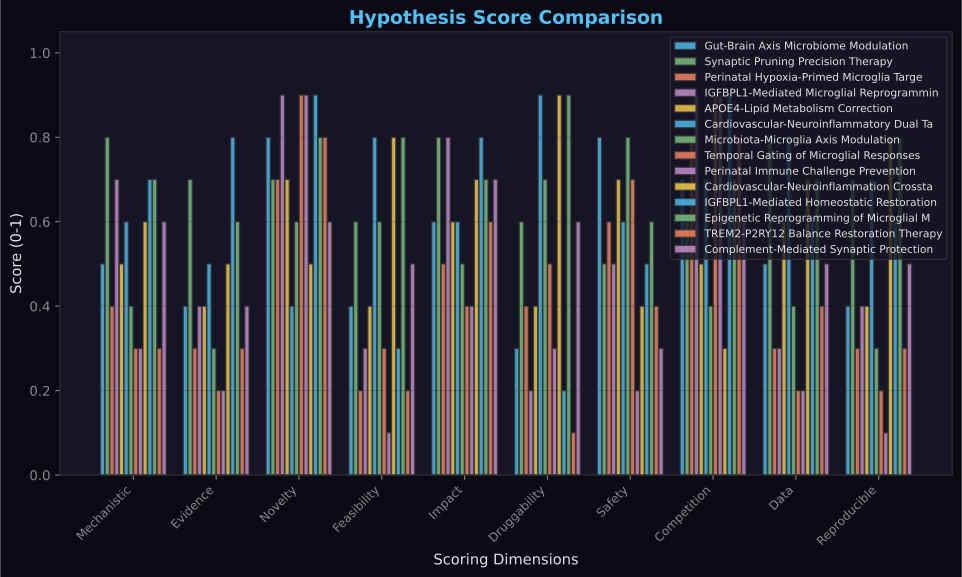
Each hypothesis is scored on 8+ dimensions from novelty to druggability.

Knowledge Graph

Interactive network of molecular relationships. Drag nodes, scroll to zoom.

Analysis Journey

1
Gap Found
Literature scan
2
Debate
5 rounds, 4 agents
3
Hypotheses
14 generated
4
KG Built
108 edges
5
Evidence
0 claims

Key Findings

1
Epigenetic Reprogramming of Microglial Memory
Target: DNMT3A, HDAC1/2

## Mechanistic Overview Epigenetic Reprogramming of Microglial Memory starts from the claim that modulating DNMT3A, HDAC1/2 within the disease context of Alzheimer's disease can redirect a disease-rel

Score: 0.65
2
Complement-Mediated Synaptic Protection
Target: C1QA

## Mechanistic Overview Complement-Mediated Synaptic Protection starts from the claim that modulating C1QA within the disease context of neurodegeneration can redirect a disease-relevant process.

Score: 0.58
3
TREM2-P2RY12 Balance Restoration Therapy
Target: TREM2

## Mechanistic Overview TREM2-P2RY12 Balance Restoration Therapy starts from the claim that modulating TREM2 within the disease context of neurodegeneration can redirect a disease-relevant process.

Score: 0.57

How This Analysis Was Created

1. Gap Detection

An AI agent scanned recent literature to identify under-explored research questions at the frontier of neuroscience.

2. Multi-Agent Debate

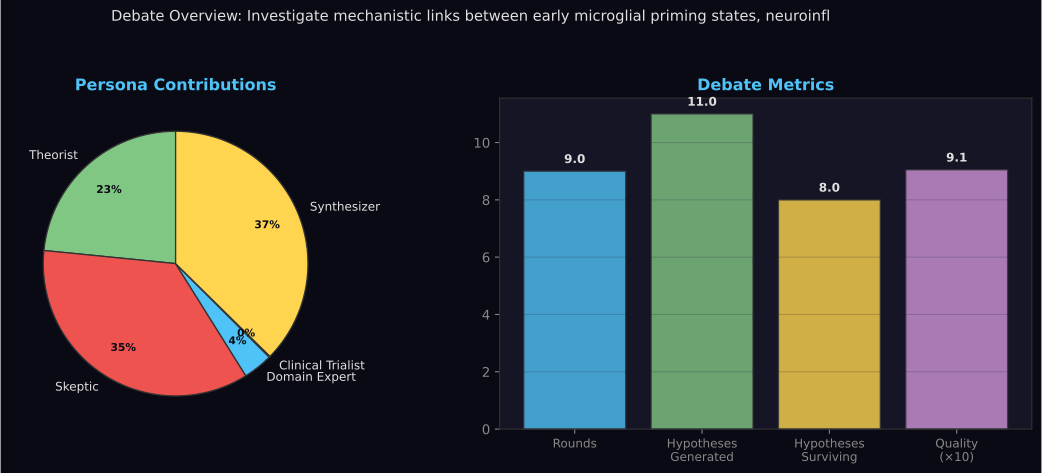
Four AI personas (Theorist, Skeptic, Domain Expert, Synthesizer) debated the question across 5 rounds, generating and stress-testing hypotheses.

3. Evidence Gathering

Each hypothesis was evaluated against PubMed literature, clinical trial data, and gene expression databases to build an evidence portfolio.

4. Knowledge Graph

108 molecular relationships were extracted and mapped into an interactive knowledge graph connecting genes, pathways, and diseases.

Executive Summary

The synthesis reveals IGFBPL1-mediated microglial homeostasis reset therapy as the most promising hypothesis, scoring 0.67 due to strong mechanistic plausibility and high novelty, despite limitations in evidence base and feasibility. This approach offers a direct, biologically grounded intervention targeting a master regulator of microglial function, with clear therapeutic potential for early AD intervention. The synaptic-microglial interface restoration and cardiovascular dual-targeting approaches follow closely, representing more feasible but less novel strategies that leverage existing therapeutic paradigms.

The analysis identified critical knowledge gaps across all hypotheses, particularly in translational feasibility, drug delivery mechanisms, and safety profiles. The skeptical critique successfully downgraded several hypotheses, especially those relying on early-life interventions or contradictory evidence bases. The knowledge graph edges reveal key therapeutic nodes connecting microglial dysfunction to AD pathogenesis, highlighting IGFBPL1, complement cascade components, and epigenetic machinery as priority targets for further investigation. The top three hypotheses warrant immediate preclinical validation focusing on delivery mechanisms, dose-response relationships, and safety profiles in relevant AD models.

📊 Jupyter Notebook

Interactive computational analysis with code and visualizations

View Notebook →

Multi-Agent Debate

5 rounds 7 hypotheses generated Quality: 0.95

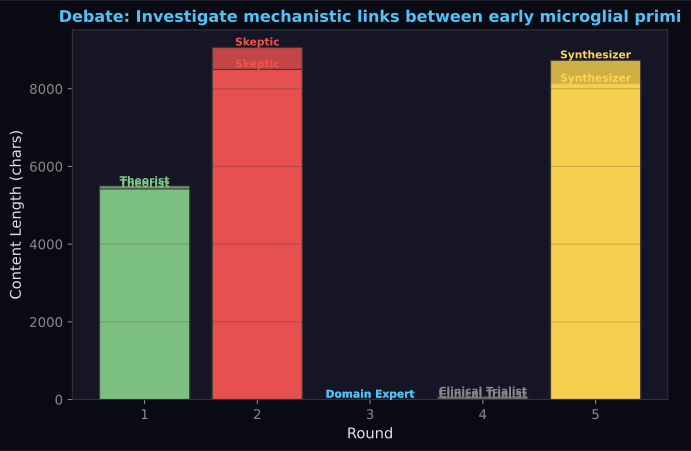
Four AI personas — Theorist, Skeptic, Domain Expert, and Synthesizer — debated this research question across 5 rounds of rigorous scientific discourse.

Round 1
🧠 Theorist

Based on the provided literature on neuroinflammation and microglial priming in early Alzheimer's disease, I'll generate novel therapeutic hypotheses that connect mechanisms across the papers:

Hypothesis 1: Perinatal Epigenetic Memory Reactivation Therapy

Target: Epigenetic modifiers (HDAC, DNMT) affected by early-life stress

Early perinatal asphyxia creates persistent epigenetic modifica

...
Round 2
⚠️ Skeptic

I'll provide a rigorous scientific critique of each hypothesis, focusing on identifying weaknesses, gaps in evidence, and alternative explanations based on the provided literature and broader scientific knowledge.

Hypothesis 1: Perinatal Epigenetic Reprogramming as AD Prevention

Critical Weaknesses:
  • Temporal disconnect: The hypothesis assumes perinatal interventions can prevent AD de

...
Round 3
💊 Domain Expert
Round 4
🤖 Clinical Trialist

Now let me search for some FDA precedents and biomarker validation studies:

Hypotheses (14)

Score Comparison

#1
Epigenetic Reprogramming of Microglial Memory
0.65
#2
Complement-Mediated Synaptic Protection
0.58
#3
TREM2-P2RY12 Balance Restoration Therapy
0.57
#4
Perinatal Immune Challenge Prevention
0.62
#5
Temporal Gating of Microglial Responses
0.57
#6
Gut-Brain Axis Microbiome Modulation
0.59
#7
APOE4-Lipid Metabolism Correction
0.61
#8
IGFBPL1-Mediated Microglial Reprogramming
0.58
#9
Microbiota-Microglia Axis Modulation
0.65
#10
Synaptic Pruning Precision Therapy
0.61
#11
IGFBPL1-Mediated Homeostatic Restoration
0.58
#12
Cardiovascular-Neuroinflammatory Dual Targeti
0.63
#13
Perinatal Hypoxia-Primed Microglia Targeting
0.55
#14
Cardiovascular-Neuroinflammation Crosstalk In
0.59
#1 Hypothesis therapeutic
Market: 0.68
0.65
Epigenetic Reprogramming of Microglial Memory
Target: DNMT3A, HDAC1/2 Disease: Alzheimer's disease Pathway: DNA methylation / epigenetic regulation
## Mechanistic Overview Epigenetic Reprogramming of Microglial Memory starts from the claim that modulating DNMT3A, HDAC1/2 within the disease context of Alzheimer's disease can redirect a disease-relevant process. The original description reads: "# Epigenetic Reprogramming of Microglial Memory: A Novel Approach to Preventing Neurodegeneration ## Scientific Background Neuroinflammation represents a critical pathological hallmark of neurodegenerative diseases, with microglia—the resident immune c...
Confidence 0.60
Novelty 0.80
Feasibility 0.80
Impact 0.70
Mechanism 0.70
Druggability 0.90
Safety 0.60
Reproducibility 0.80
Competition 0.70
Data Avail. 0.70
0 evidence for 0 evidence against
#2 Hypothesis therapeutic
Market: 0.62
0.58
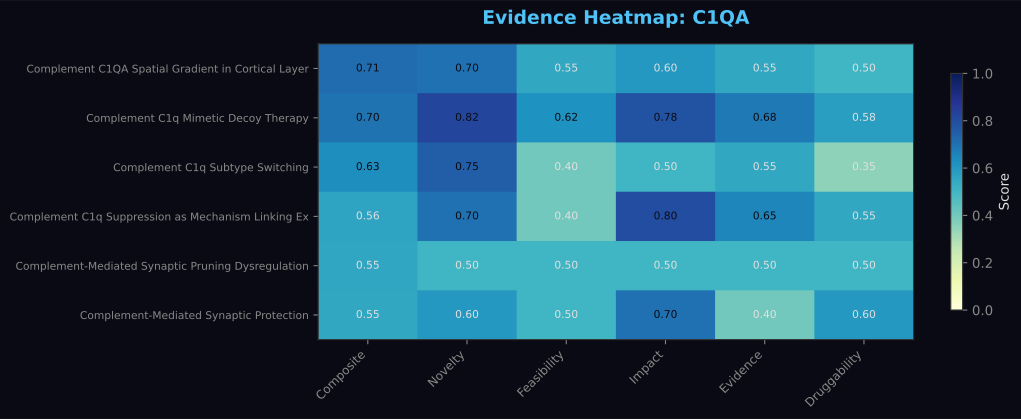
Complement-Mediated Synaptic Protection
Target: C1QA Disease: neurodegeneration Pathway: Classical complement cascade
## Mechanistic Overview Complement-Mediated Synaptic Protection starts from the claim that modulating C1QA within the disease context of neurodegeneration can redirect a disease-relevant process. The original description reads: "## Mechanistic Overview Complement-Mediated Synaptic Protection starts from the claim that modulating C1QA within the disease context of neurodegeneration can redirect a disease-relevant process. The original description reads: "## Complement-Mediated Synaptic Protection...
Confidence 0.40
Novelty 0.60
Feasibility 0.50
Impact 0.70
Mechanism 0.60
Druggability 0.60
Safety 0.30
Reproducibility 0.50
Competition 0.60
Data Avail. 0.50
0 evidence for 0 evidence against
#3 Hypothesis combination
Market: 0.61
0.57
TREM2-P2RY12 Balance Restoration Therapy
Target: TREM2 Disease: neurodegeneration Pathway: TREM2/TYROBP microglial signaling
## Mechanistic Overview TREM2-P2RY12 Balance Restoration Therapy starts from the claim that modulating TREM2 within the disease context of neurodegeneration can redirect a disease-relevant process. The original description reads: "## Mechanistic Overview TREM2-P2RY12 Balance Restoration Therapy starts from the claim that modulating TREM2 within the disease context of neurodegeneration can redirect a disease-relevant process. The original description reads: "## TREM2-P2RY12 Balance Restoration Th...
Confidence 0.30
Novelty 0.80
Feasibility 0.20
Impact 0.60
Mechanism 0.30
Druggability 0.10
Safety 0.40
Reproducibility 0.30
Competition 0.80
Data Avail. 0.40
0 evidence for 0 evidence against
#4 Hypothesis combination
Market: 0.65
0.62
Perinatal Immune Challenge Prevention
Target: Multiple Disease: neurodegeneration
## Mechanistic Overview Perinatal Immune Challenge Prevention starts from the claim that modulating Multiple within the disease context of neurodegeneration can redirect a disease-relevant process. The original description reads: "## Mechanistic Overview Perinatal Immune Challenge Prevention starts from the claim that modulating Multiple within the disease context of neurodegeneration can redirect a disease-relevant process. The original description reads: "## Perinatal Immune Challenge Preventi...
Confidence 0.20
Novelty 0.90
Feasibility 0.10
Impact 0.40
Mechanism 0.30
Druggability 0.30
Safety 0.20
Reproducibility 0.10
Competition 0.90
Data Avail. 0.20
0 evidence for 0 evidence against
#5 Hypothesis therapeutic
Market: 0.63
0.57
Temporal Gating of Microglial Responses
Target: CLOCK, ARNTL Disease: Alzheimer's disease Pathway: Circadian clock / BMAL1-CLOCK transcript
## Mechanistic Overview Temporal Gating of Microglial Responses starts from the claim that modulating CLOCK, ARNTL within the disease context of Alzheimer's disease can redirect a disease-relevant process. The original description reads: "## Mechanistic Overview Temporal Gating of Microglial Responses starts from the claim that modulating CLOCK, ARNTL within the disease context of Alzheimer's disease can redirect a disease-relevant process. The original description reads: "Time Anti-Inflammatory...
Confidence 0.20
Novelty 0.90
Feasibility 0.30
Impact 0.40
Mechanism 0.30
Druggability 0.50
Safety 0.70
Reproducibility 0.20
Competition 0.90
Data Avail. 0.20
0 evidence for 0 evidence against
#6 Hypothesis therapeutic
Market: 0.62
0.59
Gut-Brain Axis Microbiome Modulation
Target: GPR43, GPR109A Disease: Alzheimer's disease Pathway: Short-chain fatty acid / GPCR signaling
# Gut-Brain Axis Microbiome Modulation: Preventing Neurodegeneration Through GPR43/GPR109A Signaling ## Scientific Background The gut microbiota exerts profound influence over central nervous system (CNS) homeostasis through the gut-brain axis, a bidirectional communication network involving neural, endocrine, and immune signaling pathways. This complex communication architecture encompasses the enteric nervous system, vagal afferent pathways, neuroendocrine axes, and immunological channels ...
Confidence 0.40
Novelty 0.80
Feasibility 0.40
Impact 0.60
Mechanism 0.50
Druggability 0.30
Safety 0.80
Reproducibility 0.40
Competition 0.70
Data Avail. 0.50
0 evidence for 0 evidence against
#7 Hypothesis combination
Market: 0.64
0.61
APOE4-Lipid Metabolism Correction
Target: APOE Disease: neurodegeneration Pathway: APOE-mediated cholesterol/lipid transpor
## Mechanistic Overview APOE4-Lipid Metabolism Correction starts from the claim that modulating APOE within the disease context of neurodegeneration can redirect a disease-relevant process. The original description reads: "## APOE4-Lipid Metabolism Correction ### Mechanistic Hypothesis Overview This hypothesis proposes a disease-modifying strategy centered on **APOE4-Lipid Metabolism Correction** as a mechanistic intervention point in neurodegeneration. The core claim is that the biological proc...
Confidence 0.40
Novelty 0.70
Feasibility 0.40
Impact 0.60
Mechanism 0.50
Druggability 0.40
Safety 0.70
Reproducibility 0.40
Competition 0.50
Data Avail. 0.60
0 evidence for 0 evidence against
#8 Hypothesis combination
Market: 0.62
0.58
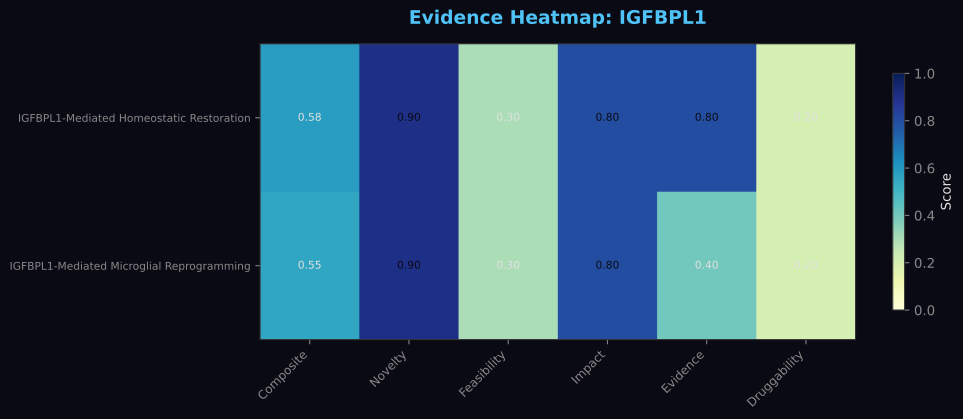
IGFBPL1-Mediated Microglial Reprogramming
Target: IGFBPL1 Disease: neurodegeneration Pathway: IGF signaling / microglial reprogramming
## Mechanistic Overview IGFBPL1-Mediated Microglial Reprogramming starts from the claim that modulating IGFBPL1 within the disease context of neurodegeneration can redirect a disease-relevant process. The original description reads: "## Mechanistic Overview IGFBPL1-Mediated Microglial Reprogramming starts from the claim that modulating IGFBPL1 within the disease context of neurodegeneration can redirect a disease-relevant process. The original description reads: "## IGFBPL1-Mediated Microglial R...
Confidence 0.40
Novelty 0.90
Feasibility 0.30
Impact 0.80
Mechanism 0.70
Druggability 0.20
Safety 0.50
Reproducibility 0.40
Competition 0.90
Data Avail. 0.30
0 evidence for 0 evidence against
#9 Hypothesis combination
Market: 0.68
0.65
Microbiota-Microglia Axis Modulation
Target: Multiple Disease: neurodegeneration
## Molecular Mechanism and Rationale The microbiota-microglia axis represents a sophisticated bidirectional communication network that fundamentally influences neuroinflammatory processes and microglial phenotypic states. This therapeutic approach targets the transition from homeostatic microglia to disease-associated microglia (DAM) through precision modulation of gut-derived metabolites and their downstream signaling cascades. The molecular foundation of this strategy centers on the recogniti...
Confidence 0.30
Novelty 0.60
Feasibility 0.60
Impact 0.50
Mechanism 0.40
Druggability 0.70
Safety 0.80
Reproducibility 0.30
Competition 0.40
Data Avail. 0.40
0 evidence for 0 evidence against
#10 Hypothesis therapeutic
Market: 0.65
0.61
Synaptic Pruning Precision Therapy
Target: C1QA, C3, CX3CR1, CX3CL1 Disease: Alzheimer's disease Pathway: Classical complement cascade
# Synaptic Pruning Precision Therapy: Targeting Complement and Chemokine Signaling to Preserve Neuronal Connectivity ## Scientific Background Synaptic pruning represents a developmentally regulated process whereby immature or redundant synaptic connections are selectively eliminated to refine neural circuitry. While essential during early postnatal development, aberrant or excessive pruning has emerged as a pathological hallmark in multiple neurodegenerative conditions, including Alzheimer's...
Confidence 0.70
Novelty 0.70
Feasibility 0.60
Impact 0.80
Mechanism 0.80
Druggability 0.60
Safety 0.50
Reproducibility 0.70
Competition 0.60
Data Avail. 0.80
0 evidence for 0 evidence against
#11 Hypothesis therapeutic
Market: 0.62
0.58
IGFBPL1-Mediated Homeostatic Restoration
Target: IGFBPL1 Disease: Alzheimer's disease Pathway: IGF signaling / microglial reprogramming
## Mechanistic Overview IGFBPL1-Mediated Homeostatic Restoration starts from the claim that modulating IGFBPL1 within the disease context of Alzheimer's disease can redirect a disease-relevant process. The original description reads: "# IGFBPL1-Mediated Homeostatic Restoration: Targeting Microglial Priming in Neurodegeneration ## Scientific Background Neuroinflammation, characterized by sustained microglial activation, represents a critical pathological feature across multiple neurodegenerative ...
Confidence 0.80
Novelty 0.90
Feasibility 0.30
Impact 0.80
Mechanism 0.70
Druggability 0.20
Safety 0.50
Reproducibility 0.60
Competition 0.90
Data Avail. 0.60
0 evidence for 0 evidence against
#12 Hypothesis combination
Market: 0.66
0.63
Cardiovascular-Neuroinflammatory Dual Targeting
Target: TNF/IL6 Disease: neurodegeneration
## Mechanistic Overview Cardiovascular-Neuroinflammatory Dual Targeting starts from the claim that modulating TNF/IL6 within the disease context of neurodegeneration can redirect a disease-relevant process. The original description reads: "## Mechanistic Overview Cardiovascular-Neuroinflammatory Dual Targeting starts from the claim that modulating TNF/IL6 within the disease context of neurodegeneration can redirect a disease-relevant process. The original description reads: "## Cardiovascular-Ne...
Confidence 0.50
Novelty 0.40
Feasibility 0.80
Impact 0.60
Mechanism 0.60
Druggability 0.90
Safety 0.60
Reproducibility 0.70
Competition 0.70
Data Avail. 0.80
0 evidence for 0 evidence against
#13 Hypothesis therapeutic
Market: 0.59
0.55
Perinatal Hypoxia-Primed Microglia Targeting
Target: HIF1A, NFKB1 Disease: Alzheimer's disease Pathway: Hypoxia-inducible factor / cellular stre
## Mechanistic Overview Perinatal Hypoxia-Primed Microglia Targeting starts from the claim that modulating HIF1A, NFKB1 within the disease context of Alzheimer's disease can redirect a disease-relevant process. The original description reads: "## Mechanistic Overview Perinatal Hypoxia-Primed Microglia Targeting starts from the claim that modulating HIF1A, NFKB1 within the disease context of Alzheimer's disease can redirect a disease-relevant process. The original description reads: "## Perinatal...
Confidence 0.30
Novelty 0.70
Feasibility 0.20
Impact 0.50
Mechanism 0.40
Druggability 0.40
Safety 0.60
Reproducibility 0.30
Competition 0.80
Data Avail. 0.30
0 evidence for 0 evidence against
#14 Hypothesis therapeutic
Market: 0.62
0.59
Cardiovascular-Neuroinflammation Crosstalk Interruption
Target: IL1B, TNFA, NLRP3 Disease: Alzheimer's disease Pathway: NLRP3 inflammasome activation
# Cardiovascular-Neuroinflammation Crosstalk Interruption: Targeting Shared Inflammatory Mediators in Neurodegeneration ## Scientific Background Cardiovascular disease and neurodegenerative pathology share more than epidemiological correlation—they are mechanistically linked through chronic systemic inflammation characterized by elevated circulating levels of interleukin-1 beta (IL-1β), tumor necrosis factor-alpha (TNF-α), and nucleotide-binding oligomerization domain (NOD)-like receptor fam...
Confidence 0.50
Novelty 0.50
Feasibility 0.80
Impact 0.70
Mechanism 0.60
Druggability 0.90
Safety 0.40
Reproducibility 0.80
Competition 0.30
Data Avail. 0.70
0 evidence for 0 evidence against

Gene Expression Context

Expression data from Allen Institute and other transcriptomic datasets relevant to the target genes in this analysis.

DNMT3A, HDAC1/2 via Epigenetic Reprogramming of Microglial Memory

DNMT3A (DNA Methyltransferase 3 Alpha) is a de novo DNA methyltransferase that establishes DNA methylation patterns. In brain, DNMT3A is critical for neuronal differentiation, synaptic plasticity, and memory. It methylates promoter regions of genes involved in neural development, and its activity is dynamically regulated during learning. In AD, DNMT3A expression is altered in affected brain region

Dataset: Allen Human Brain Atlas, GTEx Brain v8, ROSMAP, Human Protein Atlas

Hypothesis Pathway Diagrams (14)

Molecular pathway diagrams generated for each hypothesis, showing key targets, interactions, and therapeutic mechanisms.

PATHWAY Epigenetic Reprogramming of Microglial Memory
graph TD
    A["Amyloid beta
aggregates"] --> B["Microglial
activation"] B --> C["DNMT3A
upregulation"] B --> D["HDAC1/2
upregulation"] C --> E["DNA methylation
at inflammatory
promoters"] D --> F["Histone
deacetylation"] E --> G["Chromatin
condensation"] F --> G G --> H["Transcriptional
repression of
resolution genes"] G --> I["Enhanced IL-1beta
and TNF-alpha
expression"] H --> J["Microglial
priming state"] I --> J J --> K["Persistent
neuroinflammation"] L["HDAC inhibitors
(SAHA, TSA)"] --> F M["DNMT inhibitors
(5-azacytidine)"] --> E K --> N["Neuronal
death"] N --> O["Cognitive
decline"] classDef pathology fill:#ef5350 classDef normal fill:#4fc3f7 classDef therapeutic fill:#81c784 classDef outcome fill:#ffd54f classDef molecular fill:#ce93d8 class A,K,N pathology class B,G,H normal class L,M therapeutic class O outcome class C,D,E,F,I,J molecular
PATHWAY Complement-Mediated Synaptic Protection
graph TD
    A["Amyloid beta oligomers"]
    B["Hyperphosphorylated tau"]
    C["C1QA gene expression"]
    D["C1q protein deposition"]
    E["Classical complement activation"]
    F["C3 convertase formation"]
    G["C3b opsonization"]
    H["C4b pathway activation"]
    I["Microglial CR3 receptors"]
    J["Synaptic phagocytosis"]
    K["Synaptic loss"]
    L["Cognitive decline"]
    M["Complement inhibitors"]
    N["C3aR antagonists"]
    O["Neuroprotective therapy"]

    A -->|"activates"| E
    B -->|"triggers"| E
    C -->|"upregulates"| D
    D -->|"initiates"| E
    E -->|"forms"| F
    F -->|"generates"| G
    E -->|"activates"| H
    G -->|"targets synapses"| I
    H -->|"enhances"| I
    I -->|"promotes"| J
    J -->|"causes"| K
    K -->|"leads to"| L
    M -->|"blocks"| E
    N -->|"inhibits"| I
    O -->|"prevents"| K

    classDef mechanism fill:#4fc3f7
    classDef pathology fill:#ef5350
    classDef therapy fill:#81c784
    classDef outcome fill:#ffd54f
    classDef genetics fill:#ce93d8

    class A,B,D,E,F,G,H mechanism
    class I,J,K,L pathology
    class M,N,O therapy
    class C genetics
PATHWAY TREM2-P2RY12 Balance Restoration Therapy
graph TD
    A["TREM2 receptor
activation"] --> B["DAP12 signaling
complex"] B --> C["SYK kinase
phosphorylation"] C --> D["PI3K/AKT
pathway activation"] D --> E["Microglial survival
and proliferation"] F["P2RY12 receptor
dysfunction"] --> G["Reduced ATP/ADP
sensing capacity"] G --> H["Impaired microglial
chemotaxis"] H --> I["Defective debris
clearance"] J["Protein aggregates
accumulation"] --> F J --> K["Chronic neuroinflammation"] K --> L["Mitochondrial
dysfunction"] L --> M["Neuronal cell death"] E --> N["Enhanced phagocytosis
capacity"] N --> O["Restored tissue
homeostasis"] P["TREM2-P2RY12
balance therapy"] --> A P --> Q["P2RY12 pathway
restoration"] Q --> G classDef normal fill:#4fc3f7 classDef therapeutic fill:#81c784 classDef pathology fill:#ef5350 classDef outcome fill:#ffd54f classDef molecular fill:#ce93d8 class A,B,C,D,E,N normal class P,Q therapeutic class F,G,H,I,J,K,L,M pathology class O outcome class A,C,D,Q molecular
PATHWAY Perinatal Immune Challenge Prevention
graph TD
    A["Perinatal Immune
Challenge"] --> B["Maternal Cytokines
IL-1beta, TNF-alpha"] B --> C["Fetal Brain
Microglial Activation"] C --> D["Neuroinflammatory
Priming"] D --> E["Altered Synaptic
Development"] D --> F["Compromised
Blood-Brain Barrier"] E --> G["Reduced Neuronal
Plasticity"] F --> H["Increased CNS
Vulnerability"] G --> I["Impaired Stress
Response Circuits"] H --> J["Accelerated Protein
Aggregation"] I --> K["Mitochondrial
Dysfunction"] J --> L["Neuronal Loss and
Circuit Degradation"] K --> L M["Anti-inflammatory
Interventions"] --> B N["Microglial
Modulators"] --> C O["Neuroprotective
Compounds"] --> E L --> P["Neurodegenerative
Disease Onset"] classDef normal fill:#4fc3f7 classDef therapeutic fill:#81c784 classDef pathology fill:#ef5350 classDef outcome fill:#ffd54f class A,B,C,D,E,F pathology class G,H,I,J,K,L pathology class M,N,O therapeutic class P outcome
PATHWAY Temporal Gating of Microglial Responses
graph TD
    A["CLOCK/ARNTL
Circadian Clock Genes"] --> B["Per/Cry
Clock Output Genes"] B --> C["NF-kappaB
Transcription Factor"] C --> D["Pro-inflammatory
Cytokines
(IL-1beta, TNF-alpha)"] A --> E["Microglial
Morphology
Ramification"] E --> F["Phagocytic
Activity
Rhythms"] F --> G["Amyloid-beta
Clearance
Efficiency"] D --> H["Neuroinflammation
Peak Period"] H --> I["Neuronal
Damage
Vulnerability"] J["Anti-inflammatory
Drug
Administration"] -->|"Timed Intervention"| H K["Circadian
Window
Identification"] --> J G --> L["Alzheimer's
Pathology
Progression"] I --> L J --> M["Enhanced
Therapeutic
Efficacy"] M --> N["Reduced
Neurodegeneration
Outcomes"] L --> O["Cognitive
Decline
Measures"] classDef normal fill:#4fc3f7 classDef therapeutic fill:#81c784 classDef pathology fill:#ef5350 classDef outcome fill:#ffd54f classDef genetic fill:#ce93d8 class A,B,E,F genetic class C,D,H,I,L pathology class J,K,M therapeutic class G,N,O outcome

Target Proteins & Genes (12)

Key molecular targets identified across all hypotheses. Click any gene to open its entity page; structural PDB references are linked when available.

DNMT3A HDAC1 2
Epigenetic Reprogramming of Microglial Memory
Score: 0.65 View hypothesis →
Structure reference: PDB 2QRV →
C1QA
Complement-Mediated Synaptic Protection
Score: 0.58 View hypothesis →
Structure reference: PDB 1PK6 →
TREM2
TREM2-P2RY12 Balance Restoration Therapy
Score: 0.57 View hypothesis →
Structure reference: PDB 6YXY →
Multiple
Perinatal Immune Challenge Prevention
Score: 0.62 View hypothesis →
CLOCK ARNTL
Temporal Gating of Microglial Responses
Score: 0.57 View hypothesis →
GPR43 GPR109A
Gut-Brain Axis Microbiome Modulation
Score: 0.59 View hypothesis →
APOE
APOE4-Lipid Metabolism Correction
Score: 0.61 View hypothesis →
Structure reference: PDB 2L7B →
IGFBPL1
IGFBPL1-Mediated Microglial Reprogramming
Score: 0.58 View hypothesis →
Structure reference: PDB 2DSQ →
C1QA C3 CX3CR1 CX3CL1
Synaptic Pruning Precision Therapy
Score: 0.61 View hypothesis →
Structure reference: PDB 1PK6 →
TNF IL6
Cardiovascular-Neuroinflammatory Dual Targeting
Score: 0.63 View hypothesis →
Structure reference: PDB 1TNF →
HIF1A NFKB1
Perinatal Hypoxia-Primed Microglia Targeting
Score: 0.55 View hypothesis →
IL1B TNFA NLRP3
Cardiovascular-Neuroinflammation Crosstalk Interruption
Score: 0.59 View hypothesis →
Structure reference: PDB 1I1B →

Knowledge Graph (108 edges)

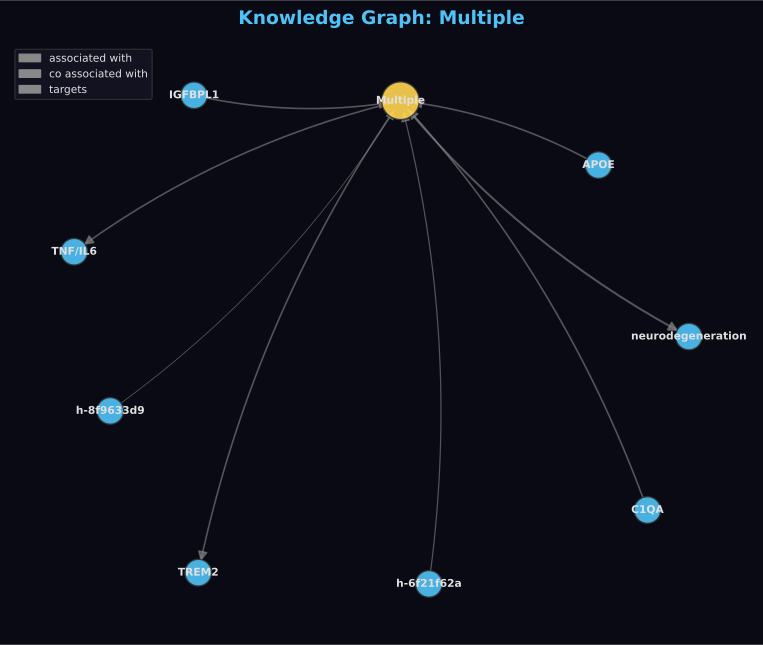
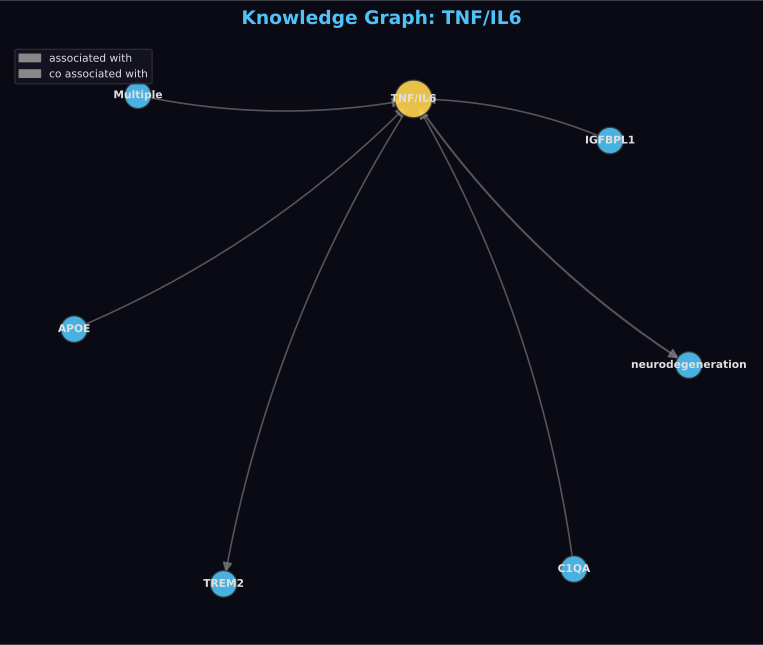
Interactive visualization of molecular relationships discovered in this analysis. Drag nodes to rearrange, scroll to zoom, click entities to explore.

associated with (9)

▸ Show 4 more

associated with microglial priming (16)

▸ Show 11 more

co associated with (35)

▸ Show 30 more

co discussed (2)

drives (1)

implicated in (14)

▸ Show 9 more

maintains (1)

mediates (1)

modulates (1)

programs (1)

promotes (1)

regulates (1)

targets (25)

▸ Show 20 more

Pathway Diagram

Key molecular relationships — gene/protein nodes color-coded by type

graph TD
    h_d4ff5555["h-d4ff5555"] -->|targets| IGFBPL1["IGFBPL1"]
    h_d4ff5555_1["h-d4ff5555"] -->|implicated in| Alzheimer_s_disease["Alzheimer's disease"]
    h_494861d2["h-494861d2"] -->|targets| C1QA["C1QA"]
    h_494861d2_2["h-494861d2"] -->|targets| C3["C3"]
    h_494861d2_3["h-494861d2"] -->|targets| CX3CR1["CX3CR1"]
    h_494861d2_4["h-494861d2"] -->|targets| CX3CL1["CX3CL1"]
    h_494861d2_5["h-494861d2"] -->|implicated in| Alzheimer_s_disease_6["Alzheimer's disease"]
    h_e5f1182b["h-e5f1182b"] -->|targets| DNMT3A["DNMT3A"]
    h_e5f1182b_7["h-e5f1182b"] -->|targets| HDAC1["HDAC1"]
    h_e5f1182b_8["h-e5f1182b"] -->|targets| n2["2"]
    h_e5f1182b_9["h-e5f1182b"] -->|implicated in| Alzheimer_s_disease_10["Alzheimer's disease"]
    IGFBPL1_11["IGFBPL1"] -->|regulates| microglial_homeostasis["microglial_homeostasis"]
    style h_d4ff5555 fill:#4fc3f7,stroke:#333,color:#000
    style IGFBPL1 fill:#ce93d8,stroke:#333,color:#000
    style h_d4ff5555_1 fill:#4fc3f7,stroke:#333,color:#000
    style Alzheimer_s_disease fill:#ef5350,stroke:#333,color:#000
    style h_494861d2 fill:#4fc3f7,stroke:#333,color:#000
    style C1QA fill:#ce93d8,stroke:#333,color:#000
    style h_494861d2_2 fill:#4fc3f7,stroke:#333,color:#000
    style C3 fill:#ce93d8,stroke:#333,color:#000
    style h_494861d2_3 fill:#4fc3f7,stroke:#333,color:#000
    style CX3CR1 fill:#ce93d8,stroke:#333,color:#000
    style h_494861d2_4 fill:#4fc3f7,stroke:#333,color:#000
    style CX3CL1 fill:#ce93d8,stroke:#333,color:#000
    style h_494861d2_5 fill:#4fc3f7,stroke:#333,color:#000
    style Alzheimer_s_disease_6 fill:#ef5350,stroke:#333,color:#000
    style h_e5f1182b fill:#4fc3f7,stroke:#333,color:#000
    style DNMT3A fill:#ce93d8,stroke:#333,color:#000
    style h_e5f1182b_7 fill:#4fc3f7,stroke:#333,color:#000
    style HDAC1 fill:#ce93d8,stroke:#333,color:#000
    style h_e5f1182b_8 fill:#4fc3f7,stroke:#333,color:#000
    style n2 fill:#ce93d8,stroke:#333,color:#000
    style h_e5f1182b_9 fill:#4fc3f7,stroke:#333,color:#000
    style Alzheimer_s_disease_10 fill:#ef5350,stroke:#333,color:#000
    style IGFBPL1_11 fill:#ce93d8,stroke:#333,color:#000
    style microglial_homeostasis fill:#4fc3f7,stroke:#333,color:#000

Figures & Visualizations (11)

Pathway Diagrams (3)
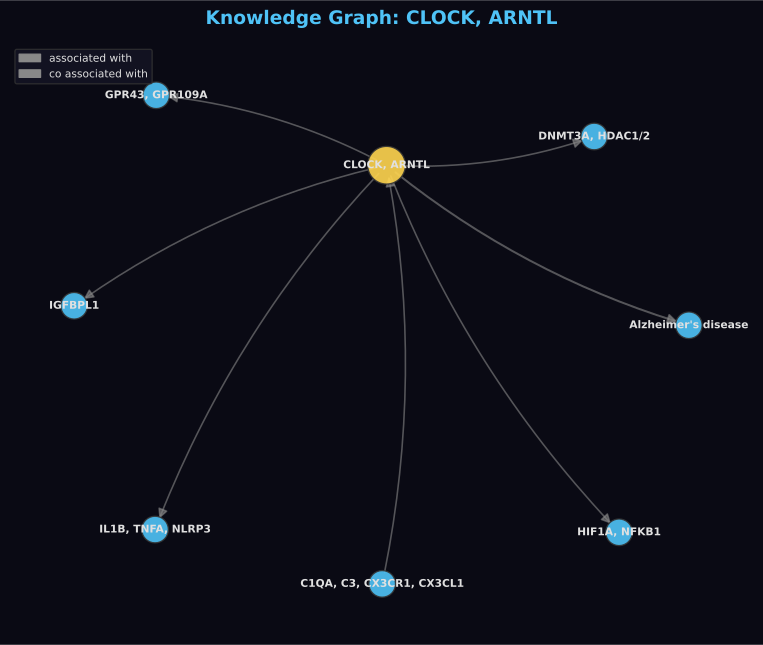
pathway CLOCK, ARNTL

pathway CLOCK, ARNTL

pathway Multiple

pathway Multiple

pathway TNF IL6

pathway TNF IL6

Score Comparisons (1)

score comparison

score comparison

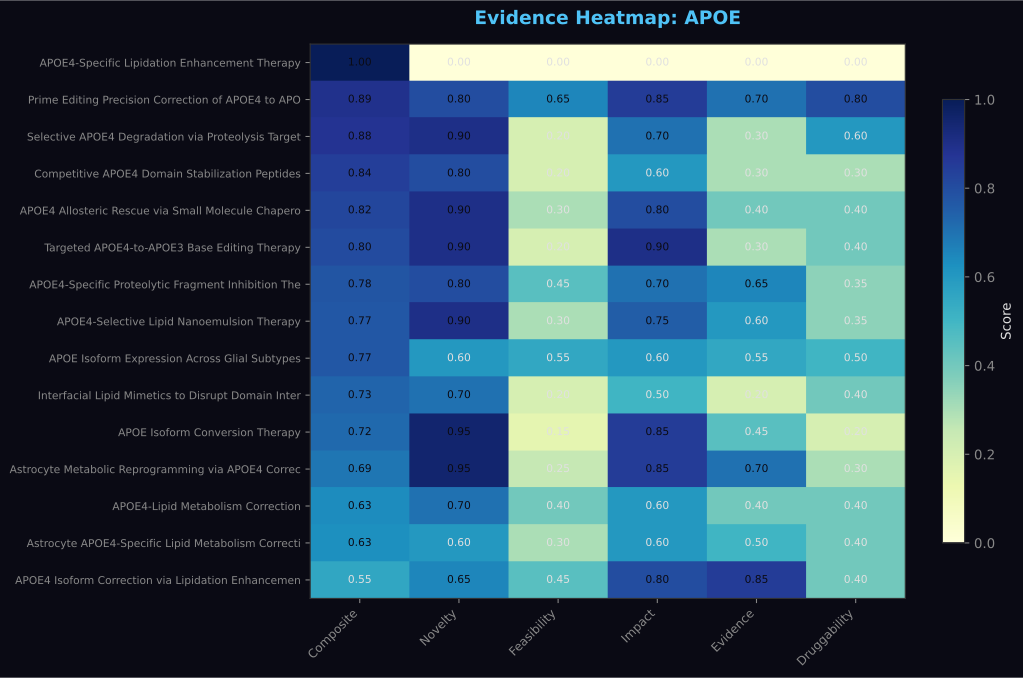
Heatmaps (5)

heatmap APOE

heatmap APOE

heatmap C1QA

heatmap C1QA

heatmap IGFBPL1

heatmap IGFBPL1

2 more in full analysis view

Debate Impact (2)

debate overview

debate overview

debate impact

debate impact

Linked Wiki Pages (20)

Entities from this analysis that have detailed wiki pages

BICCN Human Brain Cell Atlas dataset BrainSpan Atlas dataset nih-blueprint-neuroimaging dataset oasis dataset AAIC 2026 ISTAART Sessions event Conference Index event Mixed Pathology Effects on Parkinson's Diseas experiment Protein Aggregation Kinetic Validation Results experiment Invicro organization ARNTL Gene — Aryl Hydrocarbon Receptor Nuclear Tra gene C1QA Gene gene Complement Component 3 (C3) biomarker C3 — Complement Component 3 gene Blood p-Tau217 as a Clock for Alzheimer's Dis mechanism CLOCK Gene gene Blood p-Tau217 as a Clock for Alzheimer's Dis mechanism Fractalkine (CX3CL1) - Neuroinflammation Biomarker biomarker CX3CL1 — Fractalkine (C-X3-C Motif Chemokine Ligan gene CX3CR1 — CX3C Chemokine Receptor 1 gene DNMT3A Gene gene

Key Papers (10)

Precision Neurodegeneration: Integrating Molecular Mechanisms, Biomarkers, and Targeted Therapeutics.
CNS & neurological disorders drug targets 2026 · PMID: 41833042
Complement C1q-Targeted Microglial Membrane Camouflaged Nanolipid Carriers for Synaptic Protection in Alzheimer's D
Nano letters 2026 · PMID: 41114949
Microglia regulation of synaptic plasticity and learning and memory.
Neural Regen Res 2022 · PMID: 34472455
Exploring the Role of Microglial Cells in the Gut-Brain Axis Communication: A Systematic Review.
Journal of neurochemistry 2025 · PMID: 40662222
Caloric restriction.
Molecular aspects of medicine 2011 · PMID: 21840335
Brain-Gut-Microbiota Axis in Alzheimer's Disease.
Journal of neurogastroenterology and motility 2019 · PMID: 30646475
Utilization of fluid-based biomarkers as endpoints in disease-modifying clinical trials for Alzheimer's disease: a
Alzheimer's research & therapy 2024 · PMID: 38678292
Functional assessments through novel proteomics approaches: Application to insulin/IGF signaling in neurodegenerative di
Journal of neuroscience methods 2019 · PMID: 30412730
Systemic inflammation as a central player in the initiation and development of Alzheimer's disease.
Immunity & ageing : I & A 2025 · PMID: 40841660
Histone Deacetylases 1 and 2 Regulate Microglia Function during Development, Homeostasis, and Neurodegeneration in a Con
Immunity 2018 · PMID: 29548672
Standard analysis view → Full knowledge graph → Hypothesis Exchange →

More Walkthroughs

Walkthrough
Cell type vulnerability in Alzheimers Disease (SEA-AD transcriptomic d
What cell types are most vulnerable in Alzheimers Disease based on SEA-AD transcriptomic data from the Allen Brain Cell
18 hypotheses 215 edges neurodegeneration
Walkthrough
What are the mechanisms by which gut microbiome dysbiosis influences P
What are the mechanisms by which gut microbiome dysbiosis influences Parkinson's disease pathogenesis through the gut-br
20 hypotheses 505 edges neurodegeneration
Walkthrough
Tau propagation mechanisms and therapeutic interception points
Investigate prion-like spreading of tau pathology through connected brain regions, focusing on trans-synaptic transfer,
15 hypotheses 136 edges neurodegeneration
Walkthrough
CRISPR-based therapeutic approaches for neurodegenerative diseases
Evaluate the potential of CRISPR/Cas9 and related gene editing technologies for treating neurodegenerative diseases incl
0 hypotheses 0 edges neurodegeneration
Walkthrough
CRISPR-based therapeutic approaches for neurodegenerative diseases
Evaluate the potential of CRISPR/Cas9 and related gene editing technologies for treating neurodegenerative diseases incl
14 hypotheses 444 edges neurodegeneration
Walkthrough
Gene expression changes in aging mouse brain predicting neurodegenerat
What gene expression changes in the aging mouse brain predict neurodegenerative vulnerability? Use Allen Aging Mouse Bra
45 hypotheses 250 edges neurodegeneration
Walkthrough
Senolytic therapy for age-related neurodegeneration
Senolytics targeting p16/p21+ senescent astrocytes and microglia may reduce SASP-driven neuroinflammation.
8 hypotheses 340 edges neurodegeneration
Walkthrough
Epigenetic reprogramming in aging neurons
Investigate mechanisms of epigenetic reprogramming in aging neurons, including DNA methylation changes, histone modifica
9 hypotheses 132 edges neurodegeneration
Walkthrough
Blood-brain barrier transport mechanisms for antibody therapeutics
Anti-amyloid antibodies (lecanemab, donanemab) have ~0.1% brain penetrance. Engineering improved BBB transcytosis via tr
7 hypotheses 246 edges neurodegeneration
Walkthrough
Circuit-level neural dynamics in neurodegeneration
Analyze circuit-level changes in neurodegeneration using Allen Institute Neural Dynamics data. Focus on: (1) hippocampal
67 hypotheses 111 edges neuroscience
← Back to all showcase analyses