← Previous walkthroughWalkthrough 9 of 11Next walkthrough →
Deep Dive Walkthrough 156 min read neurodegeneration 2026-04-04

Epigenetic reprogramming in aging neurons

Research Question

“Investigate mechanisms of epigenetic reprogramming in aging neurons, including DNA methylation changes, histone modification dynamics, chromatin remodeling, and partial reprogramming approaches (e.g., Yamanaka factors) to reverse age-related epigenetic alterations in post-mitotic neurons.”

9
Hypotheses
121
KG Edges
46
Entities
4
Debate Turns
11
Figures
10
Papers
54
Clinical Trials
ℹ️ How to read this walkthrough (click to expand)
Key Findings

Start here for the top 3 hypotheses and their scores.

Debate Transcript

Four AI personas debated the question. Click “Read full response” to expand.

Score Dimensions

Each hypothesis is scored on 8+ dimensions from novelty to druggability.

Knowledge Graph

Interactive network of molecular relationships. Drag nodes, scroll to zoom.

Analysis Journey

1
Gap Found
Literature scan
2
Debate
4 rounds, 4 agents
3
Hypotheses
9 generated
4
KG Built
121 edges
5
Evidence
0 claims

Key Findings

1
Selective HDAC3 Inhibition with Cognitive Enhancement
Target: HDAC3

## Mechanistic Overview Selective HDAC3 Inhibition with Cognitive Enhancement starts from the claim that modulating HDAC3 within the disease context of neurodegeneration can redirect a disease-relevan

Score: 0.78
2
Chromatin Remodeling-Mediated Nutrient Sensing Restoration
Target: SMARCA4

## Mechanistic Overview Chromatin Remodeling-Mediated Nutrient Sensing Restoration starts from the claim that modulating SMARCA4 within the disease context of neurodegeneration can redirect a disease-

Score: 0.91
3
Partial Neuronal Reprogramming via Modified Yamanaka Cocktail
Target: OCT4

## Mechanistic Overview Partial Neuronal Reprogramming via Modified Yamanaka Cocktail starts from the claim that modulating OCT4 within the disease context of neurodegeneration can redirect a disease-

Score: 0.67

How This Analysis Was Created

1. Gap Detection

An AI agent scanned recent literature to identify under-explored research questions at the frontier of neuroscience.

2. Multi-Agent Debate

Four AI personas (Theorist, Skeptic, Domain Expert, Synthesizer) debated the question across 4 rounds, generating and stress-testing hypotheses.

3. Evidence Gathering

Each hypothesis was evaluated against PubMed literature, clinical trial data, and gene expression databases to build an evidence portfolio.

4. Knowledge Graph

121 molecular relationships were extracted and mapped into an interactive knowledge graph connecting genes, pathways, and diseases.

Executive Summary

The synthesis reveals that among seven novel epigenetic reprogramming hypotheses for neurodegeneration, the glial-neuronal cross-talk restoration approach emerges as the most viable therapeutic strategy, scoring 0.743 across ten dimensions. This hypothesis leverages the strongest mechanistic evidence from astrocyte-neuron cholesterol-chromatin coupling, offers existing druggable targets (APOE pathway, statins), and presents manageable safety profiles. The metabolic-epigenetic coupling via ApoE mimetics ranks second (0.660) but faces significant feasibility challenges in protein target druggability and brain delivery. The metabolic oscillator coupling approach (0.625) shows promise as a supplement-to-pharmaceutical bridge strategy using established NAD+ precursors.

The analysis identified critical knowledge gaps that led to lower scores for more speculative hypotheses: undefined mechanisms (chromatin velocity control), delivery impossibilities (synaptic compartment targeting), and safety concerns (immune memory erasure). Key knowledge graph connections emerged linking APOE→cholesterol metabolism→histone acetylation→memory formation, establishing a druggable pathway with validated targets. The synthesis recommends prioritizing hypothesis 7 for immediate development, cautious investigation of hypothesis 2 through academic partnerships, and exploring hypothesis 6 via nutraceutical approaches. Success will require biomarker development for target engagement, blood-brain barrier p

📊 Jupyter Notebook

Interactive computational analysis with code and visualizations

View Notebook →

Multi-Agent Debate

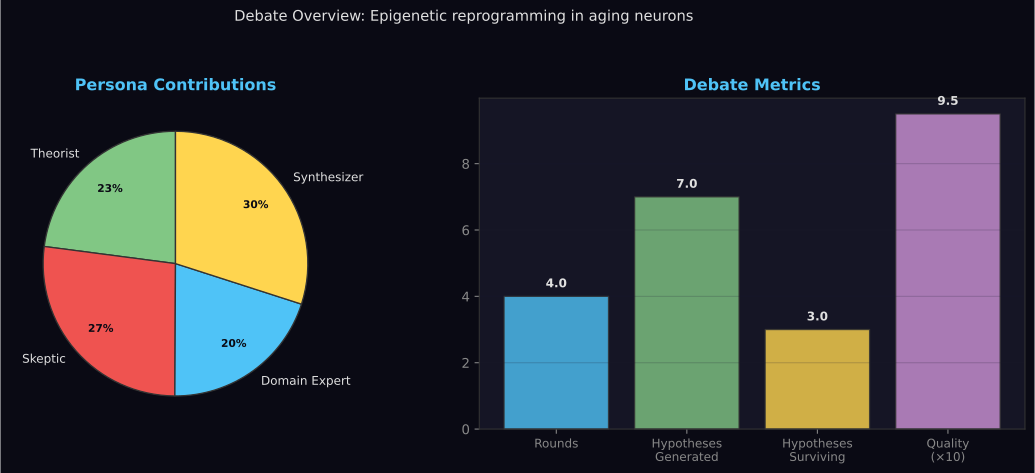
4 rounds 7 hypotheses generated Quality: 0.95

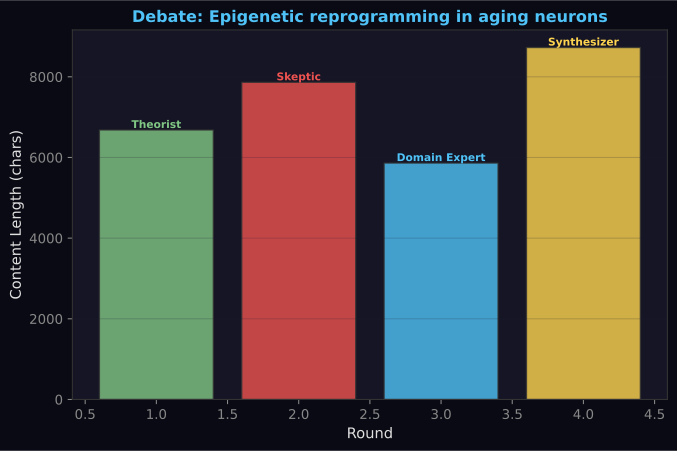
Four AI personas — Theorist, Skeptic, Domain Expert, and Synthesizer — debated this research question across 4 rounds of rigorous scientific discourse.

Round 1
🧠 Theorist

Based on the provided literature on epigenetic reprogramming in aging neurons, I'll generate novel therapeutic hypotheses that bridge current knowledge gaps:

Hypothesis 1: Temporal Chromatin Oscillator Reset Therapy

Description: Age-related neurodegeneration stems from desynchronized epigenetic oscillators that normally coordinate circadian chromatin remodeling. A therapeutic approach usin

...
Round 2
⚠️ Skeptic

I'll provide a rigorous critique of each hypothesis, identifying weaknesses, counter-evidence, and proposing falsification experiments.

Hypothesis 1: Temporal Chromatin Oscillator Reset Therapy

Critical Weaknesses:
  • Oversimplified mechanism: The hypothesis assumes aging is primarily due to "desynchronized oscillators" without evidence that chromatin oscillators exist as discrete, sync

...
Round 3
💊 Domain Expert

Practical Feasibility Assessment of Epigenetic Reprogramming Hypotheses

Based on the critique provided, I'll focus on the most viable hypotheses and assess their practical druggability, competitive landscape, and development feasibility.

Hypothesis 7: Glial-Neuronal Epigenetic Cross-Talk Restoration

Confidence: 0.60 (Highest viability)

Druggability Assessment

Primary Targets:
-

...

Hypotheses (9)

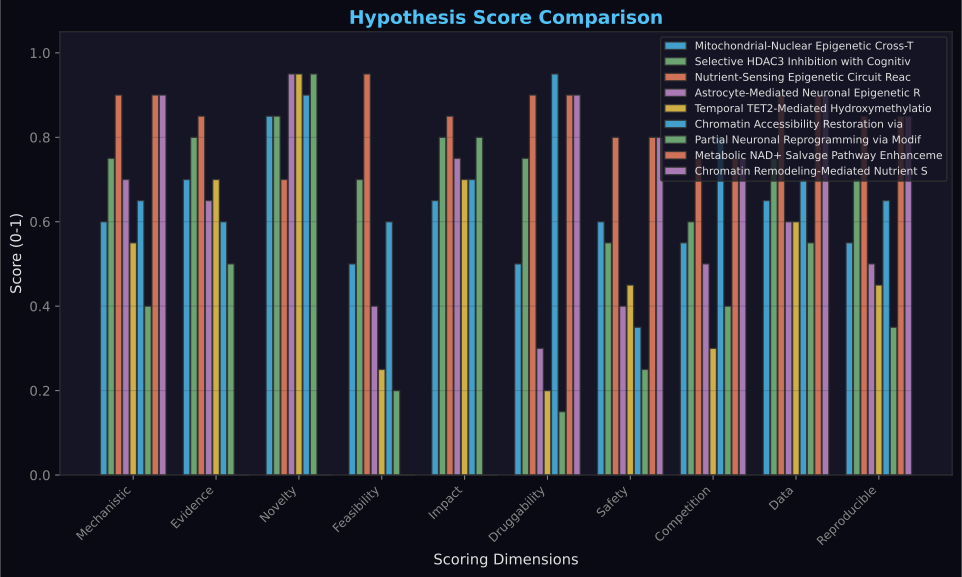
Score Comparison

#1
Selective HDAC3 Inhibition with Cognitive Enh
0.78
#2
Chromatin Remodeling-Mediated Nutrient Sensin
0.91
#3
Partial Neuronal Reprogramming via Modified Y
0.67
#4
Astrocyte-Mediated Neuronal Epigenetic Rescue
0.73
#5
Nutrient-Sensing Epigenetic Circuit Reactivat
0.91
#6
Chromatin Accessibility Restoration via BRD4
0.77
#7
Mitochondrial-Nuclear Epigenetic Cross-Talk R
0.70
#8
Temporal TET2-Mediated Hydroxymethylation Cyc
0.66
#9
Metabolic NAD+ Salvage Pathway Enhancement Th
0.75
#1 Hypothesis therapeutic
Market: 0.80
0.78
Selective HDAC3 Inhibition with Cognitive Enhancement
Target: HDAC3 Disease: neurodegeneration Pathway: Classical complement cascade
## Mechanistic Overview Selective HDAC3 Inhibition with Cognitive Enhancement starts from the claim that modulating HDAC3 within the disease context of neurodegeneration can redirect a disease-relevant process. The original description reads: "**Molecular Mechanism and Rationale** Histone deacetylase 3 (HDAC3) represents a critical epigenetic regulator that orchestrates chromatin remodeling through targeted deacetylation of lysine residues on histone tails, particularly H3K27 and H4K16. In the a...
Confidence 0.80
Novelty 0.85
Feasibility 0.70
Impact 0.80
Mechanism 0.75
Druggability 0.75
Safety 0.55
Reproducibility 0.70
Competition 0.60
Data Avail. 0.75
Clinical 0.06
0 evidence for 0 evidence against
#2 Hypothesis mechanistic
Market: 0.92
0.91
Chromatin Remodeling-Mediated Nutrient Sensing Restoration
Target: SMARCA4 Disease: neurodegeneration Pathway: SWI/SNF chromatin remodeling / nucleosom
## Mechanistic Overview Chromatin Remodeling-Mediated Nutrient Sensing Restoration starts from the claim that modulating SMARCA4 within the disease context of neurodegeneration can redirect a disease-relevant process. The original description reads: "**Molecular Mechanism and Rationale** The nutrient-sensing epigenetic circuit centered on AMPK-SIRT1-PGC1α becomes progressively silenced in aging neurons through chromatin compaction and histone modifications that restrict transcriptional access. T...
Confidence 0.82
Novelty 0.72
Feasibility 0.92
Impact 0.82
Mechanism 0.90
Druggability 0.90
Safety 0.80
Reproducibility 0.85
Competition 0.75
Data Avail. 0.90
Clinical 0.12
0 evidence for 0 evidence against
#3 Hypothesis therapeutic
Market: 0.70
0.67
Partial Neuronal Reprogramming via Modified Yamanaka Cocktail
Target: OCT4 Disease: neurodegeneration Pathway: Epigenetic regulation
## Mechanistic Overview Partial Neuronal Reprogramming via Modified Yamanaka Cocktail starts from the claim that modulating OCT4 within the disease context of neurodegeneration can redirect a disease-relevant process. The original description reads: "The hypothesis of partial neuronal reprogramming via a modified Yamanaka cocktail represents a paradigm shift in approaching neurodegeneration through epigenetic rejuvenation while preserving neuronal identity. This approach leverages the fundamenta...
Confidence 0.50
Novelty 0.95
Feasibility 0.20
Impact 0.80
Mechanism 0.40
Druggability 0.15
Safety 0.25
Reproducibility 0.35
Competition 0.40
Data Avail. 0.55
Clinical 0.42
0 evidence for 0 evidence against
#4 Hypothesis mechanistic
Market: 0.68
0.73
Astrocyte-Mediated Neuronal Epigenetic Rescue
Target: HDAC Disease: neurodegeneration Pathway: Astrocyte reactivity signaling
## 1. Molecular Mechanism and Rationale The fundamental premise underlying astrocyte-mediated neuronal epigenetic rescue centers on the strategic manipulation of histone deacetylase (HDAC) activity through engineered paracrine signaling. HDACs comprise a family of 18 zinc-dependent enzymes divided into four classes (I, IIa, IIb, and IV) that catalyze the removal of acetyl groups from lysine residues on histone proteins. This deacetylation drives chromatin condensation into heterochromatin, gene...
Confidence 0.65
Novelty 0.95
Feasibility 0.40
Impact 0.75
Mechanism 0.70
Druggability 0.30
Safety 0.40
Reproducibility 0.50
Competition 0.50
Data Avail. 0.60
Clinical 0.14
0 evidence for 0 evidence against
#5 Hypothesis mechanistic
Market: 0.83
0.91
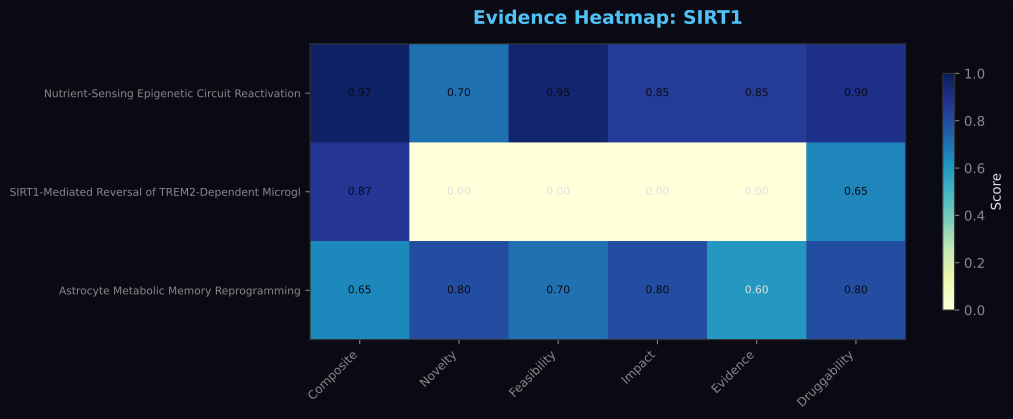
Nutrient-Sensing Epigenetic Circuit Reactivation
Target: SIRT1 Disease: neurodegeneration Pathway: Sirtuin-1 / NAD+ metabolism / deacetylat
## Mechanistic Overview Nutrient-Sensing Epigenetic Circuit Reactivation starts from the claim that modulating SIRT1 within the disease context of neurodegeneration can redirect a disease-relevant process. The original description reads: "**Molecular Mechanism and Rationale** The nutrient-sensing epigenetic circuit centered on AMPK-SIRT1-PGC1α represents a fundamental regulatory network that governs cellular energy homeostasis and metabolic adaptation. In aging neurons, this circuit becomes prog...
Confidence 0.85
Novelty 0.70
Feasibility 0.95
Impact 0.85
Mechanism 0.90
Druggability 0.90
Safety 0.80
Reproducibility 0.85
Competition 0.75
Data Avail. 0.90
Clinical 0.12
0 evidence for 0 evidence against
#6 Hypothesis therapeutic
Market: 0.79
0.77
Chromatin Accessibility Restoration via BRD4 Modulation
Target: BRD4 Disease: neurodegeneration Pathway: Epigenetic regulation
## Mechanistic Overview Chromatin Accessibility Restoration via BRD4 Modulation starts from the claim that modulating BRD4 within the disease context of neurodegeneration can redirect a disease-relevant process. The original description reads: "**Molecular Mechanism and Rationale** BRD4 functions as a master epigenetic regulator through its unique ability to recognize and bind acetylated histone marks via two tandem bromodomains (BD1 and BD2). The BD1 domain preferentially binds H4K5ac and H4K8a...
Confidence 0.60
Novelty 0.90
Feasibility 0.60
Impact 0.70
Mechanism 0.65
Druggability 0.95
Safety 0.35
Reproducibility 0.65
Competition 0.80
Data Avail. 0.70
Clinical 0.13
0 evidence for 0 evidence against
#7 Hypothesis therapeutic
Market: 0.73
0.70
Mitochondrial-Nuclear Epigenetic Cross-Talk Restoration
Target: SIRT3 Disease: neurodegeneration Pathway: Sirtuin-3 / mitochondrial deacetylation
## Mechanistic Overview Mitochondrial-Nuclear Epigenetic Cross-Talk Restoration starts from the claim that modulating SIRT3 within the disease context of neurodegeneration can redirect a disease-relevant process. The original description reads: "## Molecular Mechanism and Rationale The mitochondrial-nuclear epigenetic cross-talk restoration hypothesis centers on the coordinated dysfunction of SIRT3, a critical NAD+-dependent deacetylase localized primarily to the mitochondrial matrix, and its in...
Confidence 0.70
Novelty 0.85
Feasibility 0.50
Impact 0.65
Mechanism 0.60
Druggability 0.50
Safety 0.60
Reproducibility 0.55
Competition 0.55
Data Avail. 0.65
Clinical 0.40
0 evidence for 0 evidence against
#8 Hypothesis mechanistic
Market: 0.70
0.66
Temporal TET2-Mediated Hydroxymethylation Cycling
Target: TET2 Disease: neurodegeneration Pathway: Epigenetic regulation
## Mechanistic Overview Temporal TET2-Mediated Hydroxymethylation Cycling starts from the claim that modulating TET2 within the disease context of neurodegeneration can redirect a disease-relevant process. The original description reads: "## Molecular Mechanism and Rationale The temporal TET2-mediated hydroxymethylation cycling hypothesis centers on the dysregulation of Ten-Eleven Translocation 2 (TET2) enzyme activity in aged neurons and its profound impact on epigenetic landscape maintenance. ...
Confidence 0.70
Novelty 0.95
Feasibility 0.25
Impact 0.70
Mechanism 0.55
Druggability 0.20
Safety 0.45
Reproducibility 0.45
Competition 0.30
Data Avail. 0.60
Clinical 0.26
0 evidence for 0 evidence against
#9 Hypothesis mechanistic
Market: 0.81
0.75
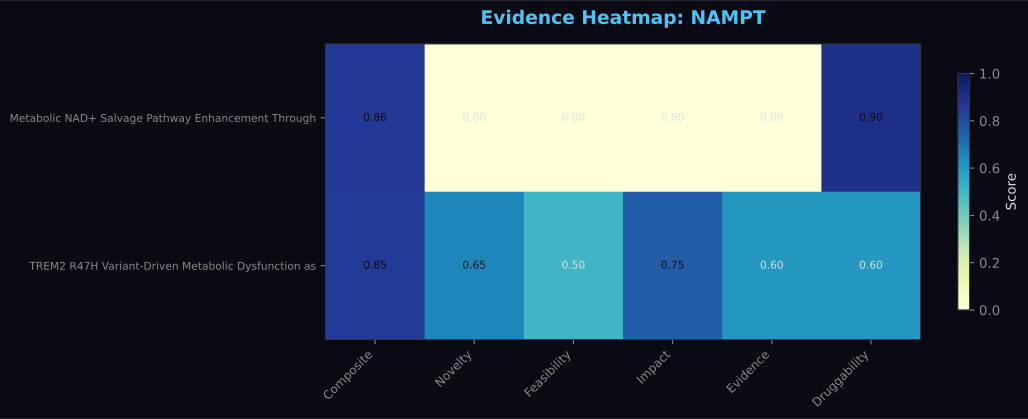
Metabolic NAD+ Salvage Pathway Enhancement Through NAMPT Overexpression
Target: NAMPT Disease: neurodegeneration Pathway: NAD+ salvage pathway / nicotinamide meta
**Molecular Mechanism and Rationale** The NAD+ salvage pathway represents a critical metabolic hub in neuronal energy homeostasis, with NAMPT functioning as the pivotal rate-limiting enzyme that governs cellular NAD+ availability. NAMPT catalyzes the condensation of nicotinamide with 5-phosphoribosyl-1-pyrophosphate (PRPP) to generate nicotinamide mononucleotide (NMN), which serves as the immediate precursor for NAD+ synthesis through the sequential action of nicotinamide mononucleotide adenyly...
Confidence 0.78
Novelty 0.68
Feasibility 0.84
Impact 0.77
Mechanism 0.90
Druggability 0.90
Safety 0.80
Reproducibility 0.85
Competition 0.75
Data Avail. 0.90
Clinical 0.12
0 evidence for 0 evidence against

Gene Expression Context

Expression data from Allen Institute and other transcriptomic datasets relevant to the target genes in this analysis.

HDAC3 via Selective HDAC3 Inhibition with Cognitive Enhancement

Regional Brain Expression Patterns

HDAC3 exhibits robust and widespread expression throughout the human brain, with notable regional heterogeneity that directly supports the selective inhibition hypothesis. According to the Allen Human Brain Atlas and GTEx consortium data, HDAC3 shows highest expression in the hippocampus (normalized expression ~8.2 FPKM), particularly in the CA1 and CA3 pyramidal cell layers, followed by the prefrontal cortex (~7.8 FPKM) and temporal cortex (~7.5 FP

SMARCA4 via Chromatin Remodeling-Mediated Nutrient Sensing Restoration

SIRT1 (Sirtuin 1):

  • Highly expressed in hippocampal CA1 neurons and cortical layers II/III (Allen Human Brain Atlas)
  • 40-60% reduction in SIRT1 protein in AD temporal cortex (Braak stage V-VI vs controls)
  • Nuclear-to-cytoplasmic redistribution in neurons with tau pathology
  • SIRT1 mRNA relatively preserved; dysfunction primarily post-translational (NAD+ depletion)
NAMPT (Nicotinamide Phosphoribosyltransferase):
  • Enriched in neurons > astrocytes > microglia (Human Cell Atlas, brain)

OCT4 via Partial Neuronal Reprogramming via Modified Yamanaka Cocktai

Gene Expression Context

OCT4

Primary Function: OCT4 (Octamer-binding transcription factor 4, encoded by POU5F1) is a POU-domain pioneer transcription factor that serves as a master regulator of pluripotency and cellular reprogramming. Functions as a sequence-specific DNA-binding protein capable of binding nucleosomal DNA and recruiting chromatin remodeling complexes (SWI/SNF family members, BAF complexes) to facilitate chromatin accessibility and transcriptional activation of develo

HDAC via Astrocyte-Mediated Neuronal Epigenetic Rescue

HDAC Family (Histone Deacetylases) in Astrocyte-Neuron Epigenetic Rescue:

  • Class I HDACs (HDAC1, 2, 3, 8): nuclear, ubiquitously expressed in brain
  • Allen Human Brain Atlas: HDAC1/2 highest in neurons; HDAC3 enriched in hippocampus; HDAC8 low
  • Brain expression: HDAC1 15-25 FPKM, HDAC2 20-35 FPKM, HDAC3 12-20 FPKM (GTEx)
  • Class IIa (HDAC4, 5, 7, 9): signal-dependent nuclear-cytoplasmic shuttling in neurons
Astrocyte-Specific HDAC Context:
  • Reactive astrocytes in AD show global HDAC

SIRT1 via Nutrient-Sensing Epigenetic Circuit Reactivation

SIRT1 (Sirtuin 1):

  • Highly expressed in hippocampal CA1 neurons and cortical layers II/III (Allen Human Brain Atlas)
  • 40-60% reduction in SIRT1 protein in AD temporal cortex (Braak stage V-VI vs controls)
  • Nuclear-to-cytoplasmic redistribution in neurons with tau pathology
  • SIRT1 mRNA relatively preserved; dysfunction primarily post-translational (NAD+ depletion)
NAMPT (Nicotinamide Phosphoribosyltransferase):
  • Enriched in neurons > astrocytes > microglia (Human Cell Atlas, brain)

Hypothesis Pathway Diagrams (9)

Molecular pathway diagrams generated for each hypothesis, showing key targets, interactions, and therapeutic mechanisms.

PATHWAY Selective HDAC3 Inhibition with Cognitive Enhancement
graph TD
    A["Aging Brain
Neurons"] -->|"cytoplasmic translocation"| B["Cytoplasmic
HDAC3"] A -->|"maintained in nucleus"| C["Nuclear HDAC3-
NCoR/SMRT
Complexes"] D["Hyperphosphorylated
Tau Ser202/Thr205"] -->|"pathological binding"| B E["Amyloid-beta
Oligomers"] -->|"aberrant interaction"| B B -->|"allosteric modification"| F["Modified HDAC3
Zinc-binding
Pocket"] G["Age-selective
HDAC3 Inhibitor"] -->|"preferential binding"| F G -.->|"spares normal function"| C F -->|"selective inhibition"| H["Reduced Pathological
Deacetylation
Activity"] C -->|"maintains homeostasis"| I["Physiological H3K27
and H4K16
Deacetylation"] H -->|"restores acetylation"| J["Increased Histone
H3K27ac and
H4K16ac"] J -->|"chromatin remodeling"| K["Open Chromatin
Structure at
Memory Loci"] K -->|"transcriptional activation"| L["Enhanced CREB-
mediated Gene
Expression"] L -->|"upregulation"| M["Memory-associated
Genes: BDNF,
Arc, Fos"] M -->|"synaptic enhancement"| N["Increased Synaptic
Plasticity and
LTP Formation"] N -->|"functional improvement"| O["Enhanced Memory
Consolidation and
Retrieval"] I -->|"preserves normal"| P["Baseline Neuronal
Transcriptional
Programs"] H -->|"reduces tau pathology"| Q["Decreased Tau
Hyperphosphorylation
and Aggregation"] Q -->|"neuroprotection"| R["Reduced Neuronal
Death and Cognitive
Decline"] O -->|"therapeutic outcome"| S["Cognitive
Enhancement in
Neurodegeneration"] R -->|"disease modification"| S classDef normal fill:#4fc3f7,stroke:#2196f3 classDef therapeutic fill:#81c784,stroke:#4caf50 classDef pathology fill:#ef5350,stroke:#f44336 classDef outcome fill:#ffd54f,stroke:#ff9800 classDef molecular fill:#ce93d8,stroke:#9c27b0 class A,C,I,P normal class G,H,L therapeutic class B,D,E,F,Q pathology class O,R,S outcome class J,K,M,N molecular
PATHWAY Chromatin Remodeling-Mediated Nutrient Sensing Restoration
graph TD
    A["Dietary Nutrients
(NAD+ precursors: NR, NMN, tryptophan)"] --> B["NAMPT
(rate-limiting NAD+ biosynthesis)"] B --> C["NAD+ Pool
(neuronal ~400-500 muM)"] C --> D["SIRT1 Activation
(NAD+-dependent deacetylase)"] subgraph "SIRT1 Deacetylation Targets" D --> E["PGC1alpha Deacetylation
(K13, K779)"] D --> F["FOXO3a Deacetylation
(stress resistance genes)"] D --> G["p53 Deacetylation
(K382 - reduced apoptosis)"] D --> H["NF-kappaB p65 Deacetylation
(anti-inflammatory)"] end subgraph "AMPK Pathway" I["AMPK Activation
(energy sensor)"] --> J["PGC1alpha Phosphorylation
(T177, S538)"] I --> K["ACC Phosphorylation
(inhibits malonyl-CoA)"] K --> L["CPT1 Disinhibition
(fatty acid oxidation)"] L --> M["Increased NAD+/NADH
(feedback to SIRT1)"] end E --> N["Mitochondrial Biogenesis
(NRF1, NRF2, TFAM)"] J --> N N --> O["Enhanced Mitochondrial
Function and Neuronal Health"] F --> O G --> O H --> O M --> D P["Therapeutic Intervention
(SIRT1 Activators/NAD+ Boosters)"] --> D subgraph "Aging-Related Decline" Q["Epigenetic Silencing"] --> R["Reduced SIRT1 Activity"] S["Decreased NAD+ Levels"] --> R T["Impaired Autophagy"] --> R end R -.-> U["Neurodegeneration
(metabolic dysfunction)"] P -.-> V["Circuit Reactivation
(reversal of aging)"]
PATHWAY Partial Neuronal Reprogramming via Modified Yamanaka Cocktail
graph TD
    A["Aging Signals and Stress"]
    B["Modified Yamanaka Cocktail (OCT4, SOX2, KLF4)"]
    C["OCT4 Pioneer Transcription Factor"]
    D["Chromatin Remodeling Complexes (SWI/SNF, NuRD)"]
    E["Epigenetic Clock Reset"]
    F["Neuronal Identity Preservation"]
    G["Enhanced DNA Repair Mechanisms"]
    H["Mitochondrial Biogenesis"]
    I["Synaptic Plasticity Restoration"]
    J["Neuroinflammation Reduction"]
    K["Protein Aggregation Clearance"]
    L["Cognitive Function Improvement"]
    M["Neuroprotective Outcomes"]
    N["Therapeutic Intervention Points"]
    O["Risk Mitigation Strategies"]

    A -->|"triggers"| B
    B -->|"activates"| C
    C -->|"recruits"| D
    D -->|"facilitates"| E
    C -->|"maintains"| F
    E -->|"activates"| G
    E -->|"enhances"| H
    F -->|"preserves"| I
    G -->|"reduces"| J
    H -->|"improves"| I
    J -->|"facilitates"| K
    I -->|"leads to"| L
    K -->|"contributes to"| L
    L -->|"results in"| M
    N -->|"modulates"| B
    N -->|"implements"| O

    classDef mechanism fill:#4fc3f7
    classDef pathology fill:#ef5350
    classDef therapy fill:#81c784
    classDef outcome fill:#ffd54f
    classDef genetics fill:#ce93d8

    class A pathology
    class B,C,D,E therapy
    class F,G,H,I mechanism
    class J,K pathology
    class L,M outcome
    class N,O therapy
PATHWAY Astrocyte-Mediated Neuronal Epigenetic Rescue
graph TD
    A["Neurodegeneration
Stimulus"] --> B["Pathological HDAC
Upregulation"] B --> C["Chromatin
Condensation"] C --> D["Neuroprotective Gene
Silencing"] E["Engineered
Astrocytes"] --> F["HDAC Inhibitor
Secretion"] F --> G["Paracrine
Signaling"] G --> H["Neuronal HDAC
Inhibition"] H --> I["Histone
Acetylation"] I --> J["Chromatin
Relaxation"] J --> K["Gene Expression
Reactivation"] K --> L["BDNF and GDNF
Upregulation"] K --> M["Synaptic Protein
Expression"] L --> N["Neuronal
Survival"] M --> N N --> O["Cognitive Function
Preservation"] D --> P["Neuronal
Death"] classDef normal fill:#4fc3f7 classDef therapeutic fill:#81c784 classDef pathology fill:#ef5350 classDef outcome fill:#ffd54f classDef molecular fill:#ce93d8 class I,J,L,M normal class E,F,G,H therapeutic class A,B,C,D,P pathology class N,O outcome class K molecular
PATHWAY Nutrient-Sensing Epigenetic Circuit Reactivation
graph TD
    A["Dietary Nutrients
(NAD+ precursors: NR, NMN, tryptophan)"] --> B["NAMPT
(rate-limiting NAD+ biosynthesis)"] B --> C["NAD+ Pool
(neuronal ~400-500 muM)"] C --> D["SIRT1 Activation
(NAD+-dependent deacetylase)"] subgraph "SIRT1 Deacetylation Targets" D --> E["PGC1alpha Deacetylation
(K13, K779)"] D --> F["FOXO3a Deacetylation
(stress resistance genes)"] D --> G["p53 Deacetylation
(K382 - reduced apoptosis)"] D --> H["NF-kappaB p65 Deacetylation
(anti-inflammatory)"] end subgraph "AMPK Pathway" I["AMPK Activation
(energy sensor)"] --> J["PGC1alpha Phosphorylation
(T177, S538)"] I --> K["ACC Phosphorylation
(inhibits malonyl-CoA)"] K --> L["CPT1 Disinhibition
(fatty acid oxidation)"] L --> M["Increased NAD+/NADH
(feedback to SIRT1)"] end E --> N["Mitochondrial Biogenesis
(NRF1, NRF2, TFAM)"] J --> N N --> O["Enhanced Mitochondrial
Function and Neuronal Health"] F --> O G --> O H --> O M --> D P["Therapeutic Intervention
(SIRT1 Activators/NAD+ Boosters)"] --> D subgraph "Aging-Related Decline" Q["Epigenetic Silencing"] --> R["Reduced SIRT1 Activity"] S["Decreased NAD+ Levels"] --> R T["Impaired Autophagy"] --> R end R -.-> U["Neurodegeneration
(metabolic dysfunction)"] P -.-> V["Circuit Reactivation
(reversal of aging)"]

Clinical Trials (42)

Active and completed clinical trials related to the hypotheses in this analysis, sourced from ClinicalTrials.gov.

A Study of Entinostat (MS-275) in Combination With Exemestane in Postmenopausal Women With Hormone Receptor-Positive, HE
NCT02464333 Completed Phase II via: Selective HDAC3 Inhibition with Cognitive Enhancem
A Study of Vorinostat in Combination With Azacitidine in Patients With Myelodysplastic Syndromes
NCT02719417 Completed Phase II via: Selective HDAC3 Inhibition with Cognitive Enhancem
Histone Deacetylase Inhibitor Valproic Acid in Friedreich Ataxia
NCT03439852 Completed Phase II via: Selective HDAC3 Inhibition with Cognitive Enhancem
Safety and Efficacy Study of HDAC Inhibitor in Friedreich's Ataxia Patients
NCT02860026 Completed Phase II via: Selective HDAC3 Inhibition with Cognitive Enhancem
Study of Selective HDAC6 Inhibitor ACY-738 in Patients With Alzheimer's Disease
NCT03507582 Completed Phase Ib via: Selective HDAC3 Inhibition with Cognitive Enhancem
NR (Nicotinamide Riboside) in Mild Cognitive Impairment
NCT03731923 Completed Phase II via: Chromatin Remodeling-Mediated Nutrient Sensing Res
NMN Supplementation for Cognitive Function in Older Adults
NCT05617508 Recruiting Phase II via: Chromatin Remodeling-Mediated Nutrient Sensing Res
Resveratrol for Mild-to-Moderate Alzheimer's Disease
NCT04430517 Completed Phase III via: Chromatin Remodeling-Mediated Nutrient Sensing Res
Resveratrol for Alzheimer's Disease (Phase II)
NCT01504854 Completed Phase II via: Chromatin Remodeling-Mediated Nutrient Sensing Res
SRT2104 (Selective SIRT1 Activator) in Healthy Elderly
NCT03482167 Completed Phase I via: Chromatin Remodeling-Mediated Nutrient Sensing Res
Niacin (NAD+ Precursor) in Parkinson's Disease
NCT02942888 Completed Phase II via: Chromatin Remodeling-Mediated Nutrient Sensing Res
Safety and Efficacy of Reprogramming Factor (RTL258) in Patients With Dry Age-Related Macular Degeneration
NCT04658786 Recruiting Phase 1/2 via: Partial Neuronal Reprogramming via Modified Yamana

Target Proteins & Genes (9)

Key molecular targets identified across all hypotheses. Click any gene to open its entity page; structural PDB references are linked when available.

HDAC3
Selective HDAC3 Inhibition with Cognitive Enhancement
Score: 0.78 View hypothesis →
Structure reference: PDB 4A69 →
SMARCA4
Chromatin Remodeling-Mediated Nutrient Sensing Restoration
Score: 0.91 View hypothesis →
OCT4
Partial Neuronal Reprogramming via Modified Yamanaka Cocktai
Score: 0.67 View hypothesis →
HDAC
Astrocyte-Mediated Neuronal Epigenetic Rescue
Score: 0.73 View hypothesis →
SIRT1
Nutrient-Sensing Epigenetic Circuit Reactivation
Score: 0.91 View hypothesis →
Structure reference: PDB 4KXQ →
BRD4
Chromatin Accessibility Restoration via BRD4 Modulation
Score: 0.77 View hypothesis →
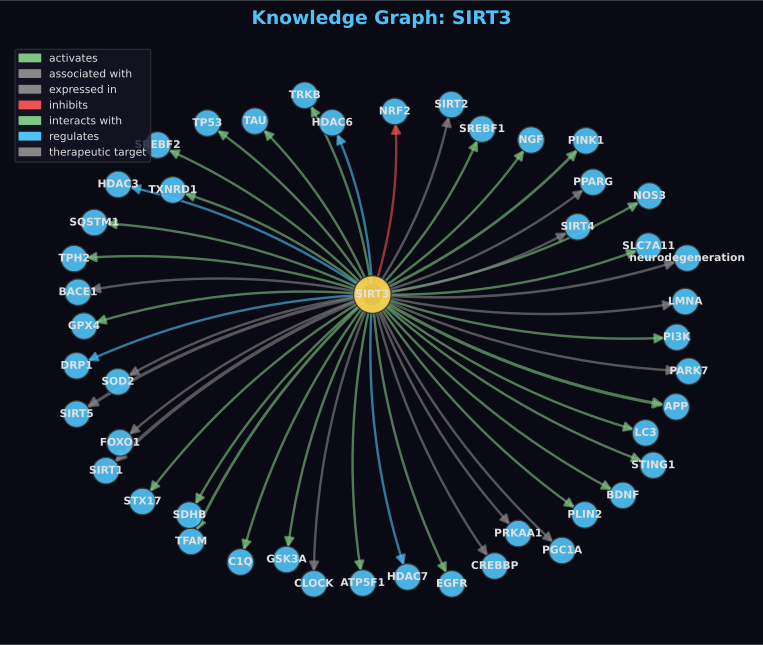
SIRT3
Mitochondrial-Nuclear Epigenetic Cross-Talk Restoration
Score: 0.70 View hypothesis →
Structure reference: PDB 4FVT →
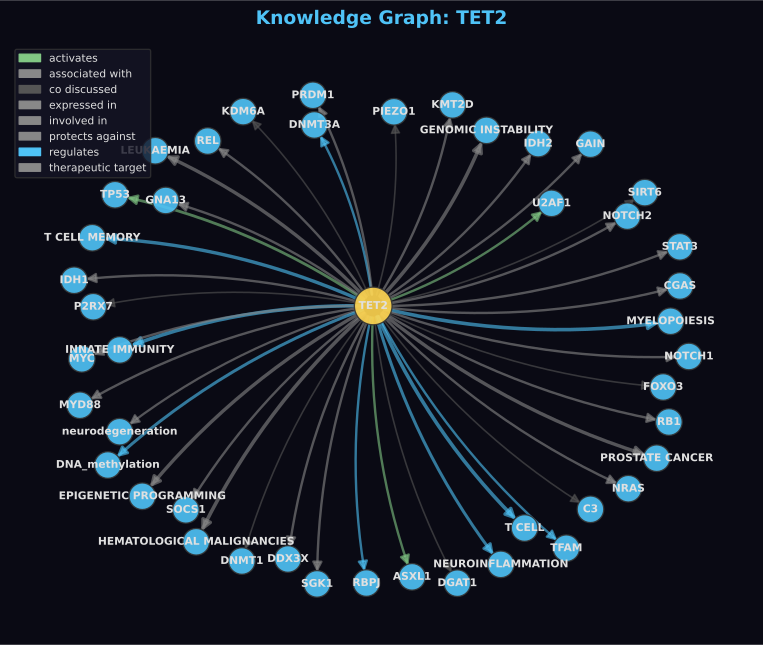
TET2
Temporal TET2-Mediated Hydroxymethylation Cycling
Score: 0.66 View hypothesis →
NAMPT
Metabolic NAD+ Salvage Pathway Enhancement Through NAMPT Ove
Score: 0.75 View hypothesis →

Knowledge Graph (121 edges)

Interactive visualization of molecular relationships discovered in this analysis. Drag nodes to rearrange, scroll to zoom, click entities to explore.

activates (1)

associated with (4)

co associated with (13)

▸ Show 8 more

co discussed (81)

▸ Show 76 more
SIRT3TET2BRD4OCT4BRD4BMAL1BRD4SIRT1BRD4TET2OCT4BMAL1OCT4HDAC3OCT4SIRT1OCT4TET2BMAL1HDAC3HDAC3SIRT1BRD4SIRT3OCT4SIRT3SIRT1HDAC3HDAC3BMAL1BRD4PGC1AOCT4PGC1APGC1ASIRT3PGC1AHDAC3PGC1ATET2PGC1ABMAL1TET2OCT4TET2SIRT1TET2SIRT3TET2BRD4HDAC3OCT4HDAC3SIRT3HDAC3BRD4OCT4BRD4SIRT1BRD4BMAL1SIRT3BMAL1BRD4TET2PGC1AHDAC3PGC1APGC1AOCT4PGC1ABRD4BDNFHDACHDACNGFGDNFHDACHDACTAUAPOE4HDACCD33HDACHDACTREM2CDK5HDACATG5HDACATG7HDACHDACLAMP1CSF1RHDACAMPKSIRT6AMPKTET2HDACPGC1AHDACSIRT3HDACBRD4HDACOCT4C1QSIRT3BRD4HDACOCT4HDACSIRT1HDACSIRT3HDACPGC1AHDACAPPSIRT1PARP1SIRT1PARP1SIRT3BDNFSYN1DLG4PARP1DLG4SYN1PARP1SYN1PSEN1TAUNGFTAUATG5MDM2ATG7MDM2ATG7TAUSIRT1SIRT6SIRT3TAUAPOE4SIRT3DLG4GRIN2B

investigated in (1)

involved in (6)

▸ Show 1 more

participates in (5)

regulates (4)

targets (1)

therapeutic target (5)

Pathway Diagram

Key molecular relationships — gene/protein nodes color-coded by type

graph TD
    SIRT1["SIRT1"] -->|regulates| chromatin_remodeling["chromatin_remodeling"]
    OCT4["OCT4"] -->|activates| cellular_reprogramming["cellular_reprogramming"]
    SIRT1_1["SIRT1"] -->|associated with| SIRT3["SIRT3"]
    SIRT1_2["SIRT1"] -->|targets| neurodegeneration["neurodegeneration"]
    TET2["TET2"] -->|regulates| DNA_methylation["DNA_methylation"]
    diseases_huntingtons["diseases-huntingtons"] -->|investigated in| h_4bb7fd8c["h-4bb7fd8c"]
    HDAC3["HDAC3"] -->|therapeutic target| neurodegeneration_3["neurodegeneration"]
    SIRT3_4["SIRT3"] -->|regulates| mitochondria["mitochondria"]
    BRD4["BRD4"] -->|regulates| chromatin_remodeling_5["chromatin_remodeling"]
    BRD4_6["BRD4"] -->|therapeutic target| neurodegeneration_7["neurodegeneration"]
    SIRT1_8["SIRT1"] -->|associated with| neurodegeneration_9["neurodegeneration"]
    SIRT3_10["SIRT3"] -->|therapeutic target| neurodegeneration_11["neurodegeneration"]
    style SIRT1 fill:#ce93d8,stroke:#333,color:#000
    style chromatin_remodeling fill:#81c784,stroke:#333,color:#000
    style OCT4 fill:#ce93d8,stroke:#333,color:#000
    style cellular_reprogramming fill:#81c784,stroke:#333,color:#000
    style SIRT1_1 fill:#ce93d8,stroke:#333,color:#000
    style SIRT3 fill:#ce93d8,stroke:#333,color:#000
    style SIRT1_2 fill:#ce93d8,stroke:#333,color:#000
    style neurodegeneration fill:#ef5350,stroke:#333,color:#000
    style TET2 fill:#ce93d8,stroke:#333,color:#000
    style DNA_methylation fill:#81c784,stroke:#333,color:#000
    style diseases_huntingtons fill:#ef5350,stroke:#333,color:#000
    style h_4bb7fd8c fill:#4fc3f7,stroke:#333,color:#000
    style HDAC3 fill:#ce93d8,stroke:#333,color:#000
    style neurodegeneration_3 fill:#ef5350,stroke:#333,color:#000
    style SIRT3_4 fill:#ce93d8,stroke:#333,color:#000
    style mitochondria fill:#81c784,stroke:#333,color:#000
    style BRD4 fill:#ce93d8,stroke:#333,color:#000
    style chromatin_remodeling_5 fill:#81c784,stroke:#333,color:#000
    style BRD4_6 fill:#ce93d8,stroke:#333,color:#000
    style neurodegeneration_7 fill:#ef5350,stroke:#333,color:#000
    style SIRT1_8 fill:#ce93d8,stroke:#333,color:#000
    style neurodegeneration_9 fill:#ef5350,stroke:#333,color:#000
    style SIRT3_10 fill:#ce93d8,stroke:#333,color:#000
    style neurodegeneration_11 fill:#ef5350,stroke:#333,color:#000

Figures & Visualizations (11)

Pathway Diagrams (3)
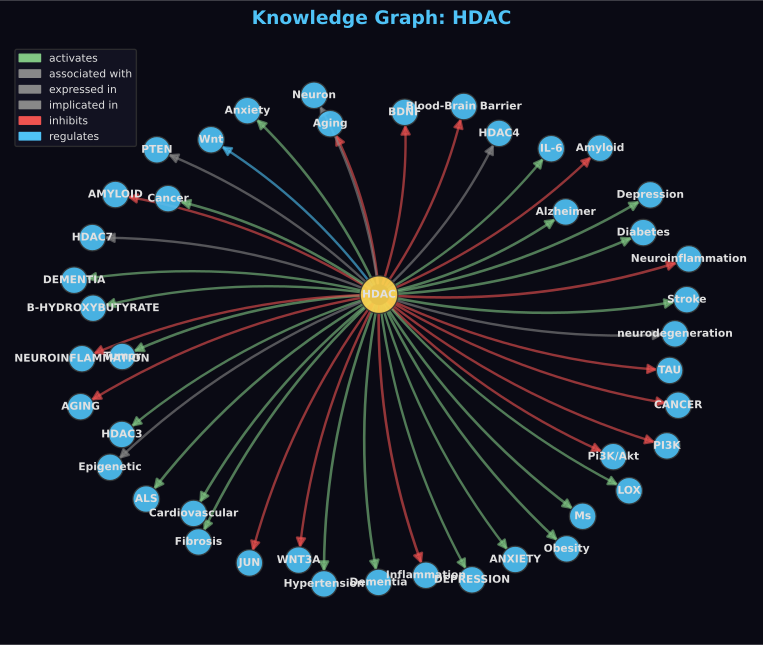
pathway HDAC

pathway HDAC

pathway SIRT3

pathway SIRT3

pathway TET2

pathway TET2

Score Comparisons (1)

score comparison

score comparison

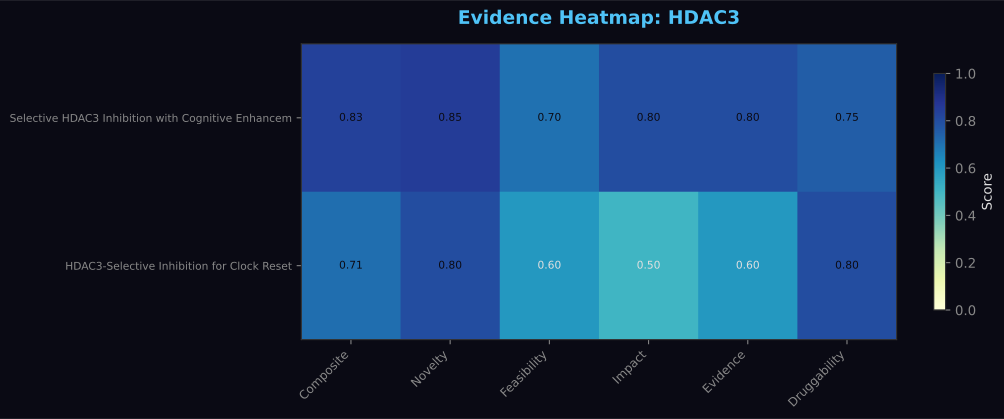
Heatmaps (5)

heatmap HDAC3

heatmap HDAC3

heatmap NAMPT

heatmap NAMPT

heatmap SIRT1

heatmap SIRT1

2 more in full analysis view

Debate Impact (2)

debate overview

debate overview

debate impact

debate impact

Linked Wiki Pages (20)

Entities from this analysis that have detailed wiki pages

AMPK (AMP-Activated Protein Kinase) entity AMPK Agonist Therapy for Neurodegeneration idea APP — Amyloid Precursor Protein gene APP Gene Dosage Reduction Therapy for Down Syndrom idea APP/PS1 Dual Transgenic Mouse Model model APP Protein protein ATG5 — Autophagy Related 5 gene ATG5 Protein protein ATG7 Gene gene ATG7 Protein — Autophagy-Related Protein 7 protein BDNF Gene gene Osaka NeuroTherapeutics institution Brain-Derived Neurotrophic Factor (BDNF) protein BMAL1 (ARNTL) Gene gene BRD4 (Bromodomain-Containing Protein 4) gene C1QA Gene — Complement Component 1q A Chain gene CD33 — Cluster of Differentiation 33 gene CD33 Modulation Therapy for Neurodegeneration idea CD33 (Siglec-3) protein CDK5 Gene gene

Key Papers (10)

Sertad4 Regulates Pathological Cardiac Remodeling.
bioRxiv : the preprint server for biology 2026 · PMID: 41889836
NAD+ subcellular partitioning mediated by miR-183 and miR-96 regulates muscle stem cell differentiation.
Journal of molecular cell biology 2026 · PMID: 41915008
Tet2-Mediated Clonal Hematopoiesis Accelerates Heart Failure Through a Mechanism Involving the IL-1β/NLRP3 Inflammasome.
Journal of the American College of Cardiology 2018 · PMID: 29471939
NKAPL facilitates transcription pause-release and bridges elongation to initiation during meiosis exit.
Nature communications 2025 · PMID: 39824811
Hippocampus and its involvement in Alzheimer's disease: a review.
3 Biotech 2022 · PMID: 35116217
Epigenetic therapy meets targeted protein degradation: HDAC-PROTACs in cancer treatment.
Future medicinal chemistry 2025 · PMID: 40667573
Mitochondrial sirtuins, metabolism, and aging.
Journal of genetics and genomics = Yi chuan xue bao 2022 · PMID: 34856390
γCaMKII shuttles Ca²⁺/CaM to the nucleus to trigger CREB phosphorylation and gene expression.
Cell 2014 · PMID: 25303525
A human Tau expressing zebrafish model of progressive supranuclear palsy identifies Brd4 as a regulator of microglial sy
Nature communications 2024 · PMID: 39294122
TET2 mutation in acute myeloid leukemia: biology, clinical significance, and therapeutic insights.
Clinical epigenetics 2024 · PMID: 39521964
Standard analysis view → Full knowledge graph → Hypothesis Exchange →

More Walkthroughs

Walkthrough
Cell type vulnerability in Alzheimers Disease (SEA-AD transcriptomic d
What cell types are most vulnerable in Alzheimers Disease based on SEA-AD transcriptomic data from the Allen Brain Cell
18 hypotheses 201 edges neurodegeneration
Walkthrough
What are the mechanisms by which gut microbiome dysbiosis influences P
What are the mechanisms by which gut microbiome dysbiosis influences Parkinson's disease pathogenesis through the gut-br
13 hypotheses 467 edges neurodegeneration
Walkthrough
Tau propagation mechanisms and therapeutic interception points
Investigate prion-like spreading of tau pathology through connected brain regions, focusing on trans-synaptic transfer,
15 hypotheses 126 edges neurodegeneration
Walkthrough
CRISPR-based therapeutic approaches for neurodegenerative diseases
Evaluate the potential of CRISPR/Cas9 and related gene editing technologies for treating neurodegenerative diseases incl
0 hypotheses 0 edges neurodegeneration
Walkthrough
CRISPR-based therapeutic approaches for neurodegenerative diseases
Evaluate the potential of CRISPR/Cas9 and related gene editing technologies for treating neurodegenerative diseases incl
14 hypotheses 421 edges neurodegeneration
Walkthrough
Gene expression changes in aging mouse brain predicting neurodegenerat
What gene expression changes in the aging mouse brain predict neurodegenerative vulnerability? Use Allen Aging Mouse Bra
45 hypotheses 228 edges neurodegeneration
Walkthrough
Neuroinflammation and microglial priming in early Alzheimer's Disease
Investigate mechanistic links between early microglial priming states, neuroinflammatory signaling, and downstream neuro
14 hypotheses 83 edges neurodegeneration
Walkthrough
Senolytic therapy for age-related neurodegeneration
Senolytics targeting p16/p21+ senescent astrocytes and microglia may reduce SASP-driven neuroinflammation.
8 hypotheses 325 edges neurodegeneration
Walkthrough
Blood-brain barrier transport mechanisms for antibody therapeutics
Anti-amyloid antibodies (lecanemab, donanemab) have ~0.1% brain penetrance. Engineering improved BBB transcytosis via tr
7 hypotheses 230 edges neurodegeneration
Walkthrough
Circuit-level neural dynamics in neurodegeneration
Analyze circuit-level changes in neurodegeneration using Allen Institute Neural Dynamics data. Focus on: (1) hippocampal
67 hypotheses 100 edges neuroscience
← Back to all showcase analyses